How we did our reporting
Old television programs, forgotten government records, cold calls to former students and months of fact-checking. Here’s what it took to report Season 2 of Sold a Story.
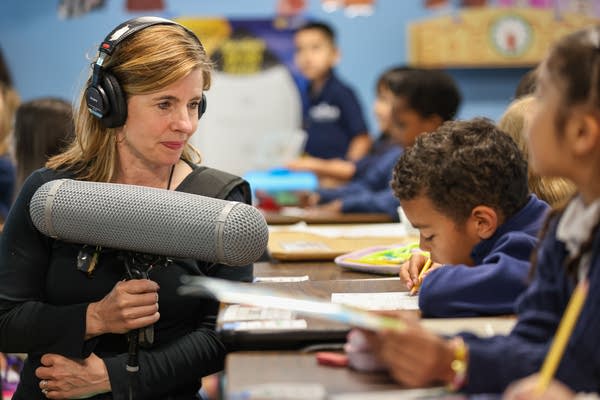
It took two years to report Season 2 of Sold a Story.
We did more than 175 interviews with people ranging in age from 6 to 99. We dug through 34 boxes of records at the National Archives, collected more than 70 hours of old video, filed records requests, read dozens of books and research papers and visited eight schools in five states.
You hear my voice in the podcast, but behind the scenes is a team of reporters and producers. Each of us followed different leads, tracked down different people and dug into different parts of the story. Together, we learned far more than we could possibly fit into seven episodes.
Building the story, one document at a time
When we take on a big reporting project like this, one of the first things we do is build a timeline.
Every time we learn something new, it goes into the timeline with a link to the source. The timeline we built for Season 2 has 928 entries — events, documents, news articles. It helps us see how things fit together, spot gaps in our reporting and keep track of what we’re learning. There are more than 25,000 pages of documents in our reporting files.
We also write memos. I’ll ask a reporter to find out about something — Project Follow Through, Lyndon Johnson’s career as a teacher, why schools stop using Direct Instruction. The reporter digs in — reading, doing interviews. Then they write a memo laying out what they learned. Some memos became the foundation for an entire episode. Others contained fascinating information that never made it into the podcast.
Sometimes a single sentence requires weeks of reporting. For example, we’d read and heard from people we interviewed that Project Follow Through was the largest educational experiment in the history of the world. We needed to know: Is that true?
Christopher Peak took on the assignment. He had to interrogate two key words.
First, “largest.” Largest in terms of what — the most students, the most schools, the most money? And was it the largest at the time or the largest ever?
Then, “experiment.” Project Follow Through wasn’t a true experiment because schools weren’t randomly assigned to the different teaching methods. And there was other messiness in the research design. Christopher had to figure out what to do with the word “experiment” in that claim, too.
He contacted researchers, identified other big studies, looked at the designs of those studies and created a chart where he compared the number of students, the number of sites and the inflation-adjusted costs. And he had to look not just at research in the United States, but all over the world.
He found that while Project Follow Through was likely the largest study at the time, there have been studies since that rivaled its size, including at least two research projects in India and one in Morocco that involved more students or more schools.
All that, to fact-check one sentence.
The people who remember Project Follow Through
Much of our reporting involved trying to understand the origins, goals, controversy and results of Project Follow Through.
Emily Haavik looked for people who worked on the study — researchers, government officials, developers of the educational programs being tested and the people on the ground trying to make the programs work in schools. She and I interviewed nearly 20 people, some of them multiple times. Several of them were in their 80s and 90s.
“It was fun to track them down,” Emily wrote in a memo. “When I asked them about Project Follow Through, they lit up. Everyone thought it would make a difference, that they were involved in something important. They were just treasure troves of information and stories, waiting to be heard.”
But memories weren’t enough. We needed records from the time to help us piece together what happened.
In May 2025, Emily discovered there were more than two dozen boxes of material about Project Follow Through at the National Archives. She contacted an archivist there to ask what was in the boxes. He said there wasn’t a list of what they contained. We’d have to go see for ourselves.
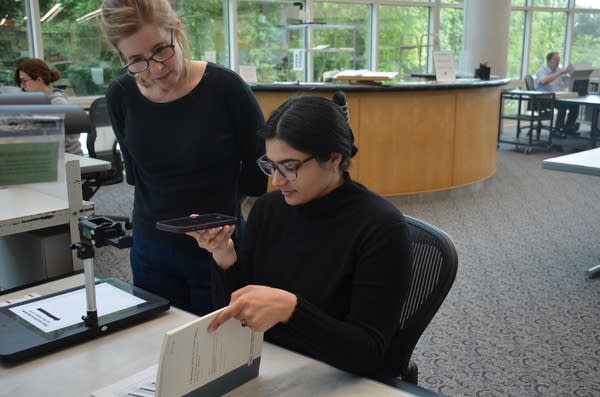
Emily, Olivia Chilkoti and I went to the National Archives outside of Washington, D.C. Emily had prepared a guide to the records we hoped to find, complete with key names and events and questions we wanted to answer. Her guide read almost like a detective novel: “February 1970 meeting notes,” “decision made to withhold from public,” “How much influence did sponsors have?”
We went through 34 boxes of materials and scanned and organized 295 key documents. Olivia read all of them and wrote a memo.
The documents told us a lot about the people who designed and ran Project Follow Through. But they told us almost nothing about what it was like to be a student in one of the classrooms. We wanted to know.
So we asked people who worked on Follow Through if they remembered the names of any students. We kept striking out until Zig’s son Kurt put Olivia in touch with a researcher who had gone through some records stored in a basement in Oregon. He sent her a single sheet of paper that listed the names and birthdays of a class of third grade students at a school in East St. Louis, Illinois.
With help from Kate Martin and others on our team, Olivia searched public records and came up with 70 people who might have been in that class. She started calling them. She got wrong numbers and disconnected phones, and she left voicemails that never got returned. But eventually she reached seven people who had been in that class and wrote a story about what they told her.
There are some great photos in that story. Finding those was another reporting adventure.
One of the former students told Olivia about two Black newspapers that covered the school. Olivia went searching through microfilm at the New York Public Library. She found far more coverage of Follow Through than she’d found in the mainstream press.
“Seeing this through a Black lens in the era of civil rights and social upheaval made it clear how meaningful this investment in schools was to the community,” Olivia wrote in her notes.
Searching for Zig’s voice
We wanted you to hear Siegfried “Zig” Engelmann in his own words. But he died in 2019, years before we started working on this podcast. We had to find recordings.
Carmela Guaglianone searched television archives, university collections, YouTube, and as she put it, “any other niche digital archive I could find.”
There was one recording we knew about that I really wanted to find. In 1966, Zig was on The Merv Griffin Show to promote a book he wrote about how parents can help their children become high achievers. That same year, he also wrote a book about his preschool for low-income kids. The preschool book was harshly criticized. The book for parents was a commercial success. He recognized that he could pursue a potentially lucrative career helping affluent kids. Or he could devote his time to helping the students who were way behind. He chose the latter. I wanted to make that decision a key turning point in the podcast. But we needed sound to help us tell the story.
Carmela spent months trying to track down that recording of Merv Griffin or any other program Zig was on to promote those books. She went through every issue of TV Guide from 1965 to 1967 looking for appearances. She searched television archives and even contacted the estates of other guests who appeared on the same programs Zig was on, in case someone had a recording in a moldy box or dusty attic. She couldn’t find what we were looking for.
But she did find about 70 hours of other archival video, including more than three dozen recordings of Zig.
Investigating Wesley Elementary
One of our most difficult reporting challenges involved Wesley Elementary, the school in a poor Houston neighborhood that attracted national attention in the 1990s for its extraordinary test scores.
There were allegations of cheating. We couldn’t ignore those.
Kate filed requests for investigative records from the Texas Education Agency and the Houston Independent School District. We appealed two denials to the Texas attorney general and lost. We never got the records we were looking for.
We tried to talk to people who had investigated the allegations. One never responded. Another declined to be interviewed. Kate did interview some of the people who had accused the school of cheating, but we couldn’t substantiate their claims. One person wanted to be paid for an interview. We never pay sources for interviews.
Some of the allegations involved teachers directing students on how to cheat. We figured the people who could tell us if that was true were the students. So we set out to find them.
We pulled names from a 1981 book about the school and from letters students had written to one of the creators of Direct Instruction. Former teachers put us in touch with old students. We found lots of students from the 1970s and ’80s on Facebook. Students connected us with classmates. One woman brought a friend from Wesley to the interview.
We talked to 17 people who were students from the 1970s to the early 2000s. None remembered being directed to cheat or witnessing any cheating. What they remembered was teachers who pushed them hard and helped them learn.
Seeing Direct Instruction for ourselves
Most of us had doubts about Direct Instruction at first. The scripted lessons, the choral responses, the repetition — it all sounded kind of unappealing.
Olivia and I were the first to see it in person, on a four-day trip to the Roger Bacon schools in North Carolina. We observed about two dozen classes at two schools and interviewed 29 people.
What we saw were engaged kids. And enthusiastic teachers. Olivia and I came away impressed.
We wanted to see what Direct Instruction looked like at more schools. And I wanted the rest of the reporting team to experience it firsthand. I wanted to know what they thought.
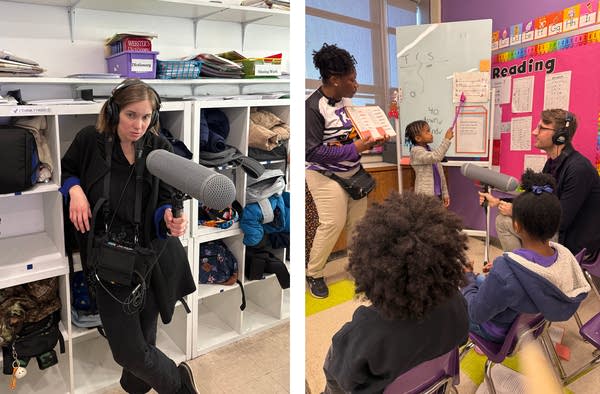
We arranged school visits for everyone. Kate went back to Roger Bacon. Christopher visited two schools in Baltimore. Carmela went to Mt. Helix Academy in California. And Emily and I flew to Oregon to visit two Arthur Academy schools. A couple of months later, I returned to Oregon with a film crew so we could show you the schools, too.
Seeing Direct Instruction in person made a big impression on our team.
After her school visit, Carmela wrote: “Even with how much I know and have heard about how engaged kids are, it’s really astonishing to see.”
For Emily Haavik, the visit was a reminder of what’s at stake. She’d just spent months immersed in research on Direct Instruction. Seeing it in classrooms, she wrote, “brought me back to reality. There are kids in school every single day and we have a chance to either catch them up or allow them to slip further behind. It made the impact of good teaching and how vital it is very real to me.”
What we couldn’t fit
These are just a few glimpses of what went into our reporting. There are many more stories behind the thousands of pages of documents and the hours of interviews.
I sometimes tell reporters that your final piece is as good as what you leave out.
It’s tempting to include something because you spent weeks finding it. It’s hard to get rid of your favorite detail.
But the point of all this reporting is to understand a story well enough to be able to tell it clearly and accurately. You’ve got to clear away the clutter and figure out what really matters.
And there is much more you can read after listening to the podcast. Here’s a guide:
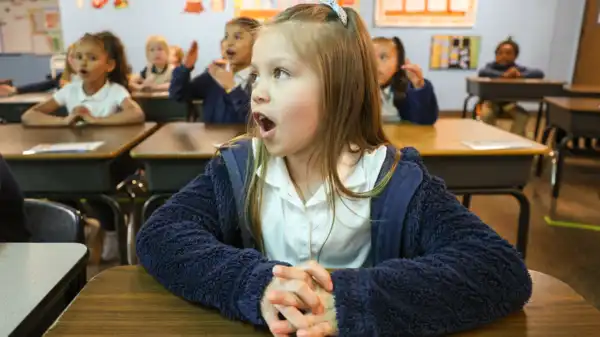
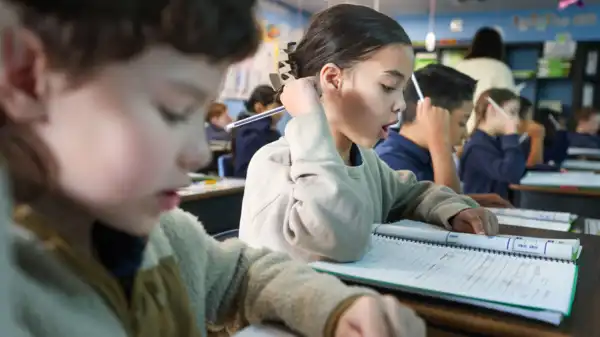
Emily Haavik, Olivia Chilkoti and Kate Martin explain what Direct Instruction is and how it works, with video filmed in Oregon classrooms.
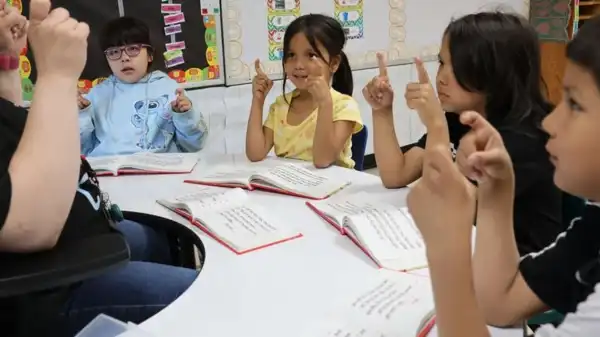
Olivia Chilkoti reports for MPR News on the Bug-O-Nay-Ge-Shig School on the Leech Lake Reservation, with help from reporter Mathew Holding Eagle III.
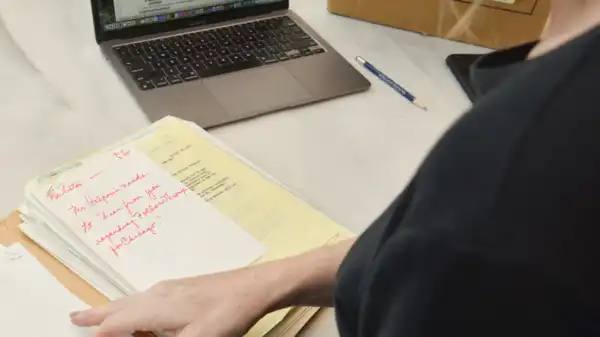
Emily Haavik and Olivia Chilkoti on the history of Project Follow Through, drawing on 34 boxes of records at the National Archives, and additional records from the Ford Foundation.
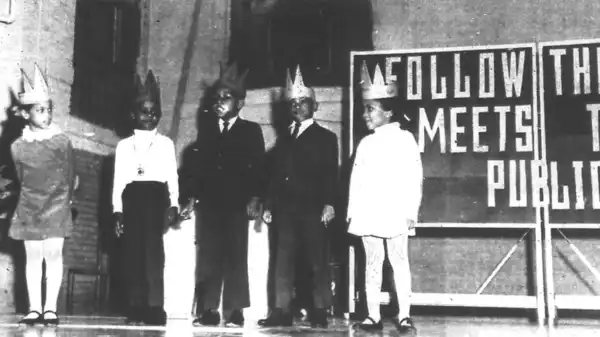
Olivia Chilkoti tracks down students from a 1970s third grade class in East St. Louis.
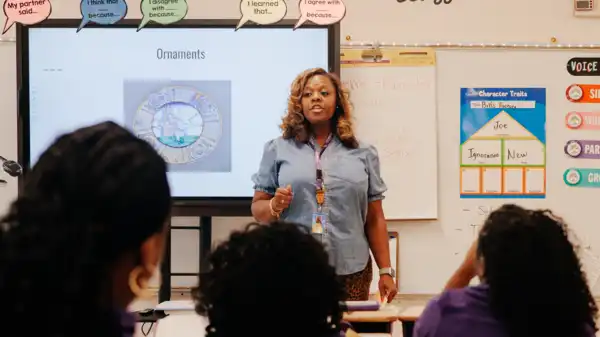
Christopher Peak and Carmela Guaglianone on what teachers think of Direct Instruction once they’ve taught it.
Christopher Peak and Emily Haavik dig into decades of research on Direct Instruction.
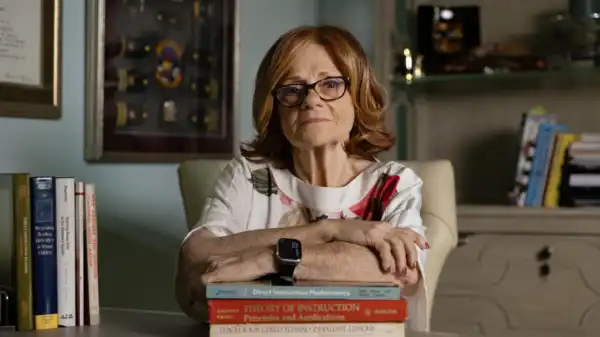
Carmela Guaglianone on why so many schools that adopt Direct Instruction end up dropping it.
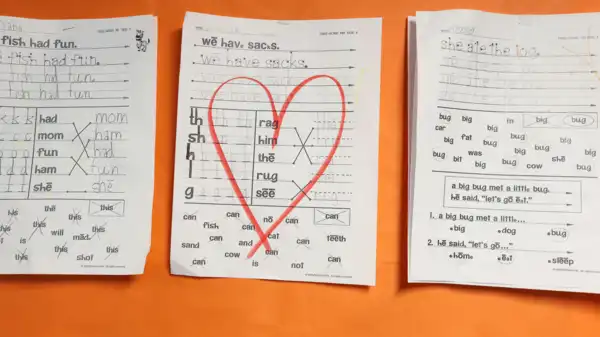
Christopher Peak on why most states’ approved reading lists leave out Direct Instruction.
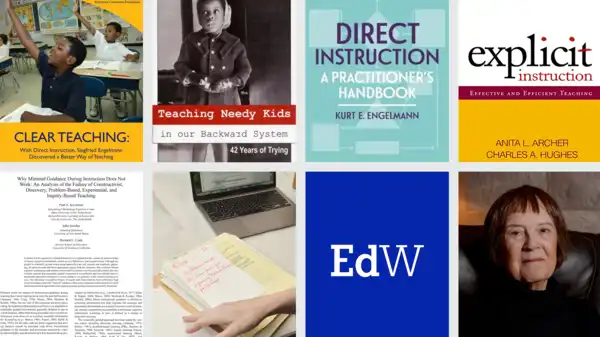
My recommendations for books and articles to read after listening to Season 2.
Kate Martin, Emily Haavik, Christopher Peak, Carmela Guaglianone, and Olivia Chilkoti contributed to this account of our reporting.

