Critics called Direct Instruction rigid and joyless. Former students remember something very different
Interviews with former students offer a rare firsthand account of one of the largest education experiments in history, challenging decades of criticism of Direct Instruction.
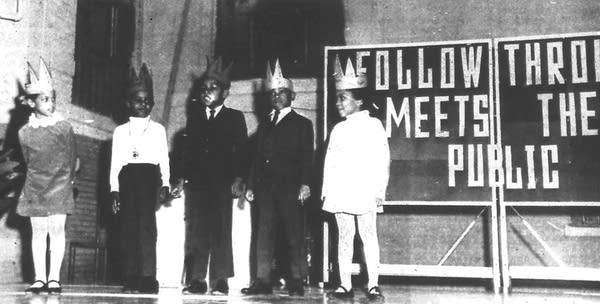
Willie Mae King remembers standing on a stage in a red and white outfit, celebrating the end of third grade with her classmates. “I remember everything from that time,” said King, now 64. “I loved going to school.”
They sang a song specially written for their class — one King still knows by heart, “Oh Follow Through, our hearts are filled with sadness that we must now depart!”
King was part of one of the largest experiments in education history: Project Follow Through. From 1968 to 1977, researchers introduced competing educational approaches into elementary schools across the United States to determine which ones worked best. The curriculum used to teach King’s class, Direct Instruction, produced the strongest results in the final evaluation. But critics dismissed it as strict and authoritarian. It was even dogged by suggestions that it amounted to “psychological torture of children.”
But that’s not how King remembers it. “That was the best part of my childhood,” she said.
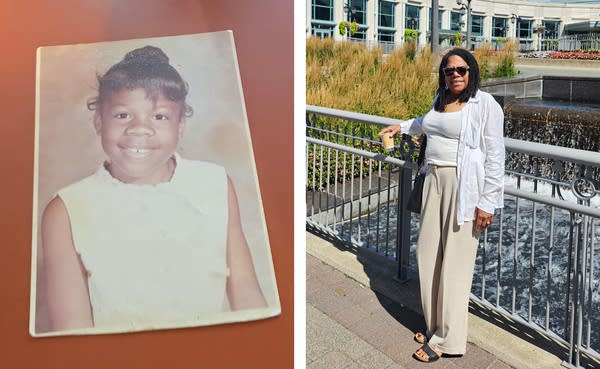
For decades, the debate over Follow Through has been shaped by researchers, policymakers and educators. The children themselves have been largely absent from the story. Even in the vast trove of records preserved at the National Archives, there are no accounts from the hundreds of thousands of schoolchildren who participated in the experiment. Interviews with King and six of her classmates challenge common criticisms of Direct Instruction.
A classroom in East St. Louis
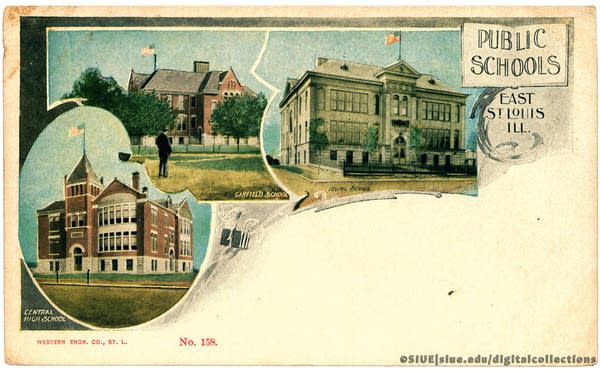
King attended Johnson School in the South End neighborhood of East St. Louis, Illinois. The yellow brick schoolhouse had a green wrought iron gate around its yard. By the time Follow Through started, the aging school had been standing for almost 100 years.
Like the building, the surrounding neighborhood was in decline. “It was a poor area, really poor,” said King’s classmate, Graham Weatherspoon. “It got progressively worse.”
Many students — King and Weatherspoon among them — lived in the Orr-Weathers public housing complex across the street. Their teacher was Ruby Hudson.
“Whenever I watched her, I couldn’t help but think how lucky those kids were to have such an awesome teacher,” wrote Siegfried Engelmann, the creator of Direct Instruction, who visited East St. Louis often during the experiment. “I would have loved to have had her as my first-grade teacher.”
Engelmann’s Direct Instruction program, used at Johnson School and other Follow Through sites in the city, is known for its fast pace and emphasis on repetition. The program uses carefully sequenced, scripted lessons and directs teachers to immediately correct all mistakes, even small ones.
Critics dismissed Direct Instruction as “an intellectual cram course,” but King and her classmates remember it fondly. “The whole thing was fun,” Weatherspoon said.
Lessons focused on reading, writing and math, but Hudson added her own flair. She incorporated East St. Louis and American history into reading lessons and created games to keep students engaged. In one, she swept a flashlight across a series of words on the board and challenged students to read each one before the beam moved on.
Sometimes Hudson taught the entire class together. Other times, she and the aides divided the room with partitions and worked with groups of five or six students — a hallmark of Direct Instruction that made it possible for each student to receive individualized help.
Though the groups were broken up by skill level, former students say they did not feel singled out. “They didn't make you feel dumb or slighted in any way,” King said.
At Johnson, the students in Follow Through remained with the same teacher for first, second, and third grades. “That teacher knew your weak spot, and that way she would know what to work on the next year,” said Erica Seaberry, who grew up next door to King.
For King, this continuity made a lasting difference. Though some of her siblings also attended Johnson, King was the only one of 11 children in her family to participate in the experiment. “I can read and comprehend,” she said, “but my brothers younger than me still struggle with reading and comprehension because they didn't get what I got.”
Hudson ran an orderly classroom and had high expectations for her students. They remember working hard, but they also remember feeling encouraged and supported. Several of Hudson’s students remarked that she never used corporal punishment, a common practice in that era, which they experienced elsewhere.
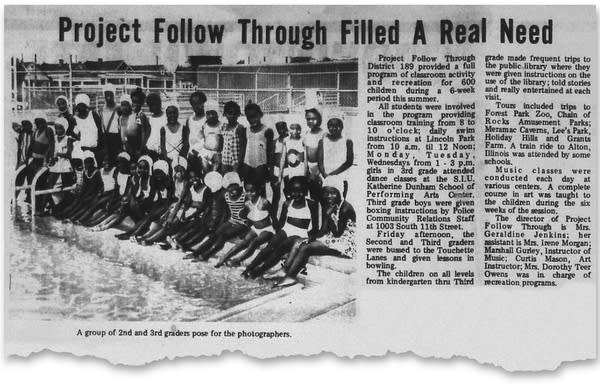
Although Direct Instruction focused on improving academic performance, the Follow Through study also provided social services and enrichment activities. Parents attended talks and trainings on topics such as budgeting and nutrition. Students received dental checkups and preventive care for polio. There was a summer school program that included field trips to the zoo and the Gateway Arch across the river in St. Louis.
Scores that defied expectations
When it came time to measure students’ growth in reading, spelling and math, the early results surprised even the creators of Direct Instruction.
“The kids did so well ... they thought they cheated,” said Gary Davis, who worked on Direct Instruction during Follow Through.
Concerned the scores might be too good to be true, co-directors Engelmann and Wesley Becker sent a new team of testers to redo the exams. The results held.
Former students remember Hudson remaining “hands off” during the testing. “It seemed like she didn't want to influence your answer,” Weatherspoon said. “Nobody gave me the answer.”
Students in East St. Louis Direct Instruction classes started out well behind their peers in the control group, Engelmann wrote in his memoir. By the end of the experiment, they had not only caught up; they had outperformed them by a substantial margin.
Although data from the East St. Louis students was omitted from the study’s final report for technical reasons, the U.S. Office of Education acknowledged their success and included the district’s Direct Instruction classes on a list of exemplary programs other schools could emulate.
‘The best years of my education’
It wasn’t until Hudson’s students left her class that some of them realized how unusual their experience had been.
In 1969, Seaberry transferred to Lily Freeman Elementary School, which had just opened a few blocks away. She quickly realized that she was ahead of her new classmates. She got in trouble for giving away the answers and talking too much. Her mother pulled her out and sent her back to Johnson, where she rejoined Follow Through.
When Follow Through ended after third grade, Weatherspoon also went to Lily Freeman Elementary. “It went straight downhill from there,” he said. He remembers the school as chaotic, and the students and teachers as disengaged. It was a far cry from his time with Hudson. “I’m 64 years old and I consider that the best three years of my education.”
Critics then and now argue that Direct Instruction is austere and overly scripted, sacrificing creativity for academic performance. But the students interviewed for this story remember their classroom as challenging, engaging and joyful.
“I was just talking about it about a couple of months ago,” said Seaberry, who went on to work in human resources for East St. Louis School District 189. “They should bring back that program for a lot of kids, ’cause it helped them.”
Until her interview with APM Reports, King had no idea she had been part of one of the largest education experiments in history. Nor had she known that Direct Instruction ranked first in Project Follow Through’s final evaluation.
“I didn’t know it was an experiment, but to me it was a good experience,” King said. “I know my reading comprehension comes from there and it’s carried me through life.”

