Your state probably hasn't approved any Direct Instruction programs. Why not?
Direct Instruction’s programs have more research establishing their effectiveness than virtually anything else on the market. And yet, only four states recommend schools use it as a primary resource to teach reading. The publishing company said that a wave of new science of reading laws has become an obstacle.
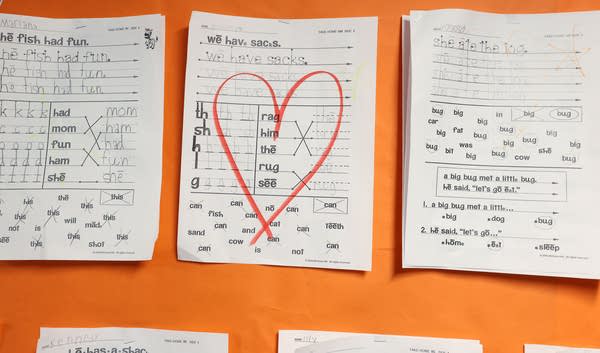
Mary Eisele was feeling optimistic. In 2021, schools were finally reopening after pandemic closures. Teachers were learning about cognitive science research on how children learn to read. And the educational publisher McGraw Hill, where Eisele is a vice president, had a new edition of a reading curriculum ready to go to market.
Reading Mastery Transformations, designed for kindergarten through fifth grade, is the centerpiece of Direct Instruction, a package of programs that have demonstrated their effectiveness in hundreds of studies across half a century. Few, if any, programs have that volume of evidence. The latest edition kept the research-proven routines but added new material and contemporary examples.
Eisele thought Reading Mastery was well-positioned for the moment. “There’s definitely a shift,” Eisele said in an interview at the time.
The trend accelerated a year later after APM Reports published the first six episodes of its podcast Sold a Story. State legislatures across the country passed legislation in response. Many of the laws tightened control over the instructional materials elementary schools use to teach reading. Nearly three-quarters of states now maintain lists of approved reading programs — some as recommendations, some as requirements.
But ironically, several years into that effort to improve reading instruction, most of those lists don’t include Reading Mastery.
Out of three dozen states that maintain such lists of primary reading programs, only four include Reading Mastery: Alaska, Arizona, Colorado and Pennsylvania. At least three others — Kansas, Minnesota and Ohio — recommend it for use with struggling readers.
McGraw Hill didn’t submit the program to most of the other states for consideration. Eisele didn’t think the program, originally designed 60 years ago, would meet the many modern requirements state reviewers are now asking for.
California, for instance, requires books that “reflect students’ varied languages and backgrounds,” while Texas requires publishers to host online “parent portals” to browse the books children will be reading. And several states only endorse programs that have received positive reviews from EdReports, an influential organization that has never rated Reading Mastery.
“I just see the ‘science of reading’ literally sealed on everything,” Eisele said. “That’s where I would like to see our states do a better job — districts do a better job — of being able to cull through that.”
Today, districts are following state recommendations, picking new programs off the lists and dropping Direct Instruction in the process.
Hamburg, a tiny district that serves students in a rural corner of southeastern Arkansas, first tried Direct Instruction in 1995. At one elementary school, reading and writing proficiency scores doubled within a decade. Teachers and administrators from more than 125 schools came to see what was happening.
“I tell our visitors that I can’t sell them on Direct Instruction, but my students can,” the school’s principal, Ernest Smith, said at the time. “No one could ever convince me to use something other than Direct Instruction.”
As recently as 2021, the school won a blue ribbon from the U.S. Department of Education for its continued success.
But when Reading Mastery didn’t make Arkansas’ list, Hamburg switched to a new language arts program, sold by Amplify, that had done well in the state’s approval review. Hamburg Superintendent Nathan Sullivan did not respond to requests for comment.
Yet even when state education departments endorse Direct Instruction, there’s no guarantee schools will adopt it. Alaska, for instance, includes Reading Mastery on its list of recommended reading programs. But when the state surveyed districts about their primary reading programs for a 2026 report, none reported using it.
“The irony of it is (Direct Instruction) adheres to the science of reading,” said Owen Engelmann, the senior author of the latest edition of Reading Mastery Transformations and the son of Direct Instruction’s late founder. But “we end up being on the outside looking in.”

An outsider’s program
Direct Instruction’s founder, Siegfried “Zig” Engelmann, was an outsider to the education system. His programs, developed in the 1960s, challenged beliefs about what good teaching looks like, and they remain controversial to this day.
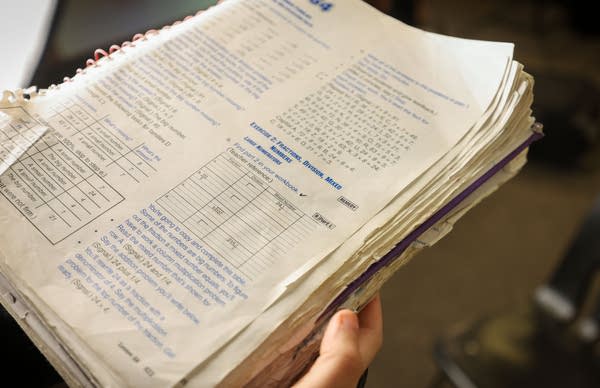
One big reason: The lessons are written out in detailed scripts. Some educators bristled at the idea that an outsider, who’d never met the students in front of them, would know what they should say and do. Even though Direct Instruction’s scripts have repeatedly been shown to be effective, critics have dismissed the programs as rigid and dated. Some have even called them authoritarian.
Engelmann didn’t help to assuage educators’ concerns. “We don’t give a damn what the teacher thinks, what the teacher feels,” he told The New Yorker in 2004. “On the teachers’ own time they can hate it. We don’t care, as long as they do it.”
For McGraw Hill, Direct Instruction can be a hard sell. School districts, “by and large,” have steered clear of scripted programs like it, said Nicole Franks, the company’s chief product officer for K-12. She said Reading Mastery now sells best to schools with students performing far below grade level who need an intensive focus on foundational skills.
McGraw Hill publishes two other primary reading programs, Emerge and Open Court, which the company submitted to many more states for approval. McGraw Hill’s previous bestseller, Wonders, the precursor to Emerge, made it onto at least 25 state lists — among the highest of any core curriculum on the market, second only to Amplify’s program.
Owen Engelmann said he wished that McGraw Hill did more to market Direct Instruction to schools. He said it often feels like the programs are kept in the company’s “back pocket.” But he said it’s difficult to compete with programs that he called “market-centric” and focus-grouped to appeal to adults rather than field-tested to work for students. “It’s not about what’s best for the kids, despite the rhetoric,” he said. “It’s about what sells most” — a commercial appeal he’s unwilling to bend to.
‘Not a priority’
Being sidelined by state education departments is nothing new for Direct Instruction. It has struggled to win state approvals and make it into schools for nearly the entirety of its 60-year history.
Even though the program was based at the University of Oregon, it wasn’t allowed in its home state for many years. And at one point, it was effectively blocked in the nation’s largest curriculum market.
California education officials distributed a checklist in the late 1980s telling schools to avoid programs like Direct Instruction. Zig Engelmann filed a lawsuit and won. But legislators passed a law that gave the state years before it had to enforce the court’s ruling.
“You ask, ‘Why would legislators vote for that?’ Because it’s financial, that’s why,” Zig Engelmann said at the time. “Education publishing is a big business. A lot of money changes hands. And the publishers are going to protect that. They’re not going to change unless it’s legislated.”
In the decade after, states did start to pass new laws — and briefly pushed Direct Instruction to the forefront. By the 1990s, cognitive science research had clearly demonstrated the importance of sounding out words when learning to read, so lawmakers started requiring phonics lessons and other foundational skills from beginning reading programs.

For a few years, districts across the country turned to Reading Mastery for a more structured way to teach. By 1998, the division at McGraw Hill that published Direct Instruction reported it beat out traditional textbook publishers in California’s statewide textbook buying spree. The publishing company said it was benefiting from “a return to basics.”
In the early 2000s, the George W. Bush administration furthered the push for better reading programs, allocating a billion dollars annually through the Reading First initiative. Detroit, Minneapolis and St. Louis all adopted Direct Instruction programs.
But other textbooks, including some also published by McGraw Hill, soon crowded the curriculum marketplace. Zig Engelmann downplayed them as knockoffs. To his frustration, state education officials seemed unable to tell the difference.
In part, that’s because programs were — and still are — judged by their coverage of states’ standards, the frameworks that outline what students should know and be able to do in each grade.
Beverlee Jobrack, a former editorial director at several publishers, including McGraw Hill, wrote about her experience in the industry in a 2012 book. She said that publishers made sure the standards were covered, sometimes shoehorning them in: “a paragraph here, an activity there, a few practice exercises … to be rewritten or reworked,” she wrote. But the main priority was what the market wanted, “what the successful competition did” and “what would appeal to teachers.”
“Demonstrating effectiveness,” Jobrack added, “was not a priority.”
Zig Engelmann refused to incorporate practices he considered ineffective, even when doing so might have helped Reading Mastery win state approval.
In 2005, Direct Instruction sales started to decline. Corporate filings indicated it was losing ground to Open Court, another McGraw Hill program that remains on the market today. The company repositioned Direct Instruction, promoting it as a program “designed to help students who have fallen behind.” Direct Instruction would struggle to break into general education classrooms again.
Once again, not on the list

After the 2021 revision, McGraw Hill thought Reading Mastery Transformations had states’ standards covered. But new science of reading legislation and other state mandates have introduced even more complications that the program hasn’t been able to keep up with.
Perhaps most importantly, the program doesn’t have a favorable rating from EdReports, a nonprofit that rose to prominence in the 2010s as part of the push for the Common Core standards. Several states have made a positive review from the organization a prerequisite in their own curriculum approval processes.
EdReports considered reviewing Reading Mastery in 2023, but it didn’t move ahead after McGraw Hill declined to participate, EdReports spokesperson Tom Green wrote in an email. Green said reviewing a program without its publisher’s cooperation would make it difficult “to obtain materials and clarify questions efficiently.” EdReports says it currently has no plans to review it.
Other evidence-backed literacy programs, including Success for All and Bookworms, have also been snubbed by EdReports — either getting bad reviews or none at all.
EdReports did review one Direct Instruction program. A decade ago, the organization panned its Connecting Math Concepts program, saying it didn’t follow Common Core standards because it taught material in the early grades that was too advanced for young students.
“They review things based on what they like, and they don’t like the way we do things,” Owen Engelmann said. “They’re exactly the opposite of what the educational system needs.”
Green said that EdReports is exploring a way to provide “clearer information” about the evidence behind publishers’ claims.

Unmet needs
But there is one bright spot for Direct Instruction. Its program for small groups of struggling readers, an intervention known as Corrective Reading, has seen an increase in sales, especially for middle and high schools, Eisele said. Expecting demand to remain high, McGraw Hill is preparing to publish a revised edition of Corrective Reading next year.
The intervention room is one place where school districts are demanding proof that programs work. Requiring the most rigorous evidence of effectiveness is “not very common” for core curricula, said Alexandra Walsh, the chief product officer at Amplify, another publisher, but it is expected “much more” for programs aimed at struggling students.
Kansas, for example, sets aside nearly half a billion dollars for the state’s most at-risk students. But districts can’t spend that money on just any reading program. To qualify, programs must have independent research showing they can improve student achievement. This year, Kansas released a list of programs that met that standard. Both Reading Mastery and Corrective Reading were on it.
Districts are free to buy programs that lack evidence of effectiveness, said Laurie Curtis, the state education department’s assistant director of literacy. “You just can’t use state funds” to do it.
Additional reporting by Kate Martin and Carmela Guaglianone.

