Liberian government official moonlights as Minnesota group home director
Companies linked to Sekou Dukuly received $36 million in taxpayer money over the past decade to care for disabled adults in Minnesota group homes — despite multiple residents dying and repeated findings of neglect. Dukuly has also misrepresented his finances in Minnesota family courts, and he’s caught up in a lawsuit concerning a business venture overseas. But the state kept sending payments to the group home companies even after he took a job in the Liberian government, more than 5,000 miles away.

In 2024, at a ceremony in the Liberian capital of Monrovia, an emcee praised the business acumen of Sekou Dukuly, the newly installed director of the West African nation’s government-owned port system.
Dukuly had been “delivering multimillion-dollar profit increases everywhere he worked,” the emcee said.
Dukuly didn’t make his money in international shipping, however. He cashed in on Minnesota’s booming group home industry.
Minnesota companies linked to Dukuly collected at least $36 million in taxpayer funds over the past 10 years, according to Minnesota Open Checkbook, a state website that provides transparency in government spending. Dukuly has had a hand in businesses that have run at least two dozen group homes, almost all in the northwestern suburbs of the Twin Cities. The state issued licenses and paid Medicaid dollars for those businesses to provide care and supervision to Minnesotans, typically those with mental illnesses or physical disabilities.
But an investigation by MPR News and its national investigative unit, APM Reports, shows that Dukuly’s financial success has come at a human cost, with multiple instances of residents being neglected and even dying in group homes linked to him. And the money has gone into bank accounts tied to alleged financial schemes in Minnesota and abroad — raising questions about the state’s oversight of the group home industry and the billions of dollars that have flowed into it.
Dukuly’s involvement in the group homes linked to him varies. In most cases, he set up the companies behind the group homes, and often he declared an ownership stake in those companies. Some of the group homes have operated out of houses he owns or has owned. And until a reporter contacted him last week, he was also the director in charge of day-to-day operations at three of them.
The state has found Dukuly-linked group homes or their employees neglected residents in 10 cases. It investigated suspected maltreatment in those group homes on at least 22 occasions, four of which involved the death of a resident. The state found a fifth resident died after he was improperly discharged. Dukuly-linked group homes make up a small fraction of the approximately 1,600 licensed facilities statewide, but they account for a disproportionate share of the state investigations into group home deaths documented in a previous MPR News/APM Reports investigation.
Police officers say they know some of those group home addresses by heart, because 911 calls from neighbors, staff and residents come in so frequently. One frustrated suburban city council unanimously voted to shut down two Dukuly-linked group homes because they’d created so much neighborhood chaos.
Despite living in Liberia, Dukuly was still running at least three Minnesota group homes until last week, according to a state licensing board. Following a phone call from a reporter seeking comment for this story, Dukuly abruptly removed himself as the licensed assisted living director at two facilities. The company, which Dukuly confirmed he owns, has 30 days to appoint his replacement. As of the close of business on Friday, he was still listed as the director of one Golden Touch Health Care group home in the state’s licensing database.
Being an assisted living director demands regular, on-site presence, according to the head of the licensing board. But it appears the board did not enforce that expectation for Dukuly.
A spokesman for the Department of Health said it recently became aware through its own research that Dukuly was living overseas. But the department downplayed the significance of that discovery in a written statement, asserting that “nothing in statute prohibits a person from living out of state.” The assisted living director — the position Dukuly held — is “not required to be onsite,” the statement added.
But Ezra Golberstein, a professor at the University of Minnesota School of Public Health who studies state health policy and funding, described running group homes from overseas as “really messed up.”
“I don’t know where in the licensure and inspection process this is falling through the cracks,” Golberstein said.
Public records show some of Dukuly’s financial practices may have crossed legal lines.
Dukuly misrepresented his finances in two separate court proceedings, pleading poverty while controlling large amounts of cash and real estate. A family court magistrate in one of those cases found money from his group home business accounts had been spent on what appeared to be personal expenses.
Though Dukuly studied accounting and once worked as a tax preparer, three businesses linked to him collectively withheld more than $45,000 in taxes from employee paychecks, but they didn’t pass that money on to the state, liens filed against group home properties show.
And in Liberia, a former business partner is currently suing Dukuly over control of a water bottling business there. The business partner provided receipts showing he wired hundreds of thousands of dollars to bank accounts belonging to Dukuly’s group home businesses in Minnesota.
Minnesota’s social services sector has been under intense scrutiny in recent years. The state has designated 14 programs as highly susceptible to fraud. Federal prosecutors have filed numerous charges as they’ve gone after what they termed “industrial-scale” Medicaid fraud in the state. Fraud — both real and unsubstantiated — also led the Trump administration to withhold hundreds of millions of dollars in Medicaid funds from Minnesota.
Neither federal nor state authorities have made such allegations against Dukuly or his business partners. But the director who ran six group homes linked to Dukuly was stripped of his license this year after pleading guilty to Medicaid fraud at a prior employer, a company with no apparent ties to Dukuly.
Oversight of group homes in Minnesota is shared between the Department of Health, which licenses the facilities linked to Dukuly, and the Department of Human Services, which funds them through Medicaid.
“The allegations outlined in your reporting are deeply concerning,” a spokesperson for the Human Services Department wrote in response to questions about Dukuly’s activities in the group home industry. The department would not confirm whether it has open investigations into any businesses linked to him.
“We can say that an owner of a Medicaid program moving abroad would raise concerns for our investigators, even if it is not prohibited by law,” the statement from the department added.
But the Health Department did not express those same concerns.
“At this time, MDH has not taken steps to revoke a license for one of the facilities linked to this person,” the department said in a written statement. “MDH has held the provider accountable for not meeting statutory requirements through other enforcement actions.”
Dukuly declined an interview request.
“I simply don’t believe an interview is the appropriate avenue for addressing these topics, particularly the ones touching on family and legal matters,” he wrote in a text message. “I believe the public record speaks for itself on the operational and licensing questions.”
Dukuly also declined to answer questions when called by a reporter last week and refused to say whether he was in Minnesota or Liberia at the time. But a post on his Facebook page indicated he was meeting with shipping industry representatives in Congo Town, on the outskirts of Monrovia.

Always ‘hustling’
Dukuly, 46, was born in Liberia and grew up during brutal, back-to-back civil wars that ravaged the country. Hospitals and schools were converted into refugee camps for displaced families. Militias roved about, shaking down civilians. Dukuly immigrated to the United States in the 2000s, when he was in his mid-20s. His passport indicates that he currently has U.S. citizenship.
During his first decade in the United States, he struggled financially. In the early 2010s, while working as a loan processor in Minneapolis, Dukuly bought a house in Elk River, but within four years, he lost it to foreclosure. Debt collectors came after him in court for an additional $12,000 in unpaid bills.
But Dukuly appeared determined to turn his fortunes around. He worked as a tax preparer in Fargo while studying accounting at the University of North Dakota in Grand Forks. His first wife, Lucy Sheriff, wrote in an affidavit that he was “always on the go and hustling.” Even when his daughter was born in early 2016, Dukuly stayed in Minnesota for just a week and then headed back to work driving a taxi in Philadelphia, Sheriff explained.
But that same year, Dukuly finally got a break. He teamed up with Emmanuel Williams, his boss at the tax-prep service, to start a new business operating group homes in the Twin Cities: Golden Touch Health Care. Williams and Dukuly split the ownership 50-50, according to court records.
The business quickly took off, and Dukuly soon set up three more group home companies: Ashton Homes, Berkeley Heights Homes and Unique Homes. By August 2020, companies linked to Dukuly were authorized to run at least 11 group homes. Two of those companies collectively reported employing more than 60 people, according to data from the pandemic-era Paycheck Protection Program. The companies received loans totaling more than $500,000 that were later forgiven.
With business booming, Dukuly developed a taste for luxury vehicles, including a Mercedes-Benz, a BMW SUV and a Range Rover, parking and traffic tickets showed.
But by 2024, Dukuly said he was ready for a change. “I spent 19 years in the states; I got tired and bored,” he said at the ceremony in Liberia celebrating his appointment as the National Port Authority’s managing director. “I achieved a lot in America. But I love Liberia.”
Dukuly has sold off much of his group home portfolio, but he maintains a hand in the industry. Last year, one of Dukuly’s appointed assisted living directors pleaded guilty to Medicaid fraud at a previous job. Michael Nornie was stripped of his license and banned from running group homes in the state. But rather than hiring a replacement, Dukuly became the sole assisted living director in charge of three facilities licensed to Golden Touch Health Care.
Life — and death — inside a group home with an absentee director
About three years ago, Stacy Muchko moved into one of those Golden Touch group homes. Two years later, paramedics carried her body out under a white sheet, dead at 46.
Muchko had spent most of her turbulent life in institutions and group homes, once under court order. She’d been diagnosed as bipolar and had chronic obstructive pulmonary disease as well as other lung conditions.
“She’s been sick most of my life, which is why she was in the group home so young,” said her adult child, Alex Muchko. “The best way that I could put it is that she is someone who tried her best with what was given to her in life.”
Even though Stacy Muchko was used to living in group homes, “there were a lot of days where she would call me terrified out of her mind,” Alex Muchko recalled, thinking back to daily phone check-ins with their mother. Stacy Muchko told Alex Muchko she was being harassed by other clients at the Golden Touch group home. In July 2024, another resident allegedly threw a cup of hot coffee on her, police records show. She was “just terrified and begging for a way to get out of there,” Alex Muchko said.
In May 2025, the Muchkos started making plans to move her out, Alex Muchko said. That was about two months after Dukuly took over for Nornie as the assisted living director. Alex, an aide for special education students, started the process to be certified as a personal care assistant so they could take over caring for their mother.
Police reports from the time confirm that Stacy Muchko’s group home in Brooklyn Park could be a scary place. An officer, checking on one room, wrote that “the living conditions seemed to be fairly unsanitary” with unfinished drinks and cigarette butts on the floor. Arguments between residents rapidly escalated into violence, and police sometimes noted staff seemed to do little in response.
Police arrived to break up a fight one morning in August 2025, just after 10 a.m., and there was only one staff member present, according to the police report. An officer noted that the employee wasn’t trying to take control of the situation.
When the officer tried to reach the group home’s administrator by phone, Sheikh Dukuly answered and suggested paramedics take the distressed resident to the hospital. Sheikh Dukuly has repeatedly presented himself as Sekou Dukuly’s brother, including at a city council meeting and in court documents, but when reached by a reporter, he denied being Sekou’s brother and refused to say how or if they were related.
The police officer who broke up the fight told Sheikh Dukuly that there were “issues with the group home,” according to his report. “When I first walked in, I was unaware and unable to identify the difference between staff and clients.”
Stacy Muchko was sometimes at the center of these fights. “She does not feel safe in the home,” an officer noted in another report, “because she does not believe that staff will intervene if [a resident] were to do anything to her.”
Muchko’s condition also appeared to be deteriorating. In July 2025, first responders showed up after she seemed to have stopped breathing. Again the following month, they responded to the group home twice in one day because Muchko passed out after having difficulty breathing.
Then in October, Muchko was unattended in a bathroom for 20 minutes. A group home employee eventually went to check and found her lying unresponsive on the floor. That employee didn’t start CPR; instead, they called the group home’s nurse, who then called 911.
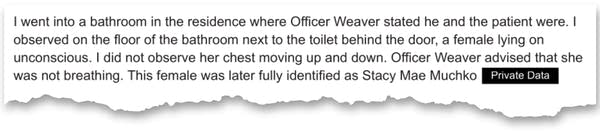
In those lost minutes when Muchko had stopped breathing, CPR might have kept blood flowing to her vital organs. A state investigation later concluded group home staff should have started the life-saving procedure. But by the time the first police officer arrived, Muchko’s skin had started to discolor. Emergency responders attempted to revive her for almost 40 minutes, until a doctor confirmed she had died.
Before Muchko moved in, Golden Touch Health Care had claimed in paperwork filed with the state that its staff were all trained in CPR. But in an interview with state investigators, the company’s nurse said she wouldn’t expect staff to perform CPR because they weren’t trained. State investigators later concluded Golden Touch had neglected Muchko, a determination the facility is appealing.
Alex Muchko wasn’t aware of the state’s maltreatment investigation until a reporter called. “That strikes me as something that I really would have wished to know before I said that they could sign on the death certificate that it was natural causes,” Alex said. “I mean, obviously the death was still natural causes, but that sounds like my mother could still be fucking alive right now.”
‘Outside the implied rules’
The state licenses assisted living directors to ensure that facilities are providing high-quality care for residents. While Minnesota’s law allows those directors to temporarily delegate authority during an absence, it strongly implies that they need to be on site regularly, said Steve Jobe, the executive director of the Board of Executives for Long Term Services and Supports.
“If you are not maintaining an on-site presence, you are operating outside the implied rules and responsibilities that you’ve been granted,” Jobe said. He declined to say definitively that holding the position while living abroad would violate state law — and the Health Department said in a statement that it doesn’t — but Jobe added that regulatory revisions currently under consideration would clarify that on-site presence is required.
The day before Muchko died, news broke in Liberia that Sekou Dukuly had been appointed chair of his political party’s local fundraising committee. And on the day of her death, his social media posts featured mock-ups of T-shirts for the party’s upcoming membership drive. His portrait filled the lower half. “Think | Love | Build Liberia,” the back of the shirt read.

Sheriff, Dukuly’s first wife, said in an interview that, to her knowledge, Dukuly returns to Minnesota only about once a year, when he visits his children.
Three days after Muchko’s death, with the director still absent, a bloody fight broke out among residents. Police found two teeth on the floor.
At the end of that month, a Health Department inspector came by the property. The inspector’s report noted the walls were stained and pocked with incompletely patched holes.
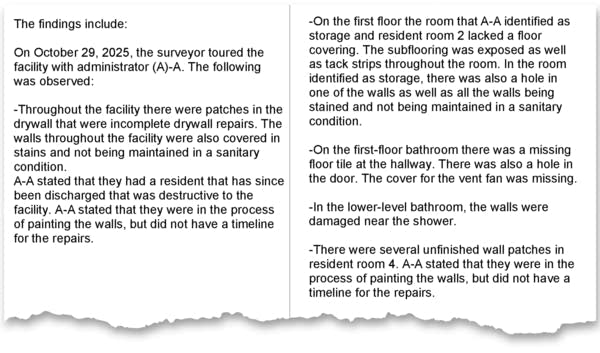
An employee on site, who’s unnamed in the report, blamed residents for taking down notices required by state regulations. The inspector pointed out that the posted license wasn’t even for the right address.
A few months later, in January 2026, the inspector checked in about the status of previous violations. Social media posts at the time show Dukuly was still in Liberia, attending President Joseph Boakai’s State of the Nation address that day. Golden Touch still had not submitted an evacuation plan for fires or other emergencies, which the state considered a serious violation. Reached by phone, the employee, again unnamed in the state report, said they had reached out to a consultant to get a new plan. But when pressed, the employee couldn’t tell the inspector when they had contacted the consultant nor provide a timeline for when it would be finished.
The Department of Health, in response to written questions, said there is no requirement for assisted living directors to be present during an inspection, because such visits are conducted without advance notice.
After a reporter told Alex Muchko about Dukuly’s other job in Liberia, they were speechless. “It sounds like he’s too stretched thin to be doing his job,” Alex Muchko said.
Golden Touch Health Care remains operational. This May, Dukuly took out almost $500,000 in loans secured against two of his group home properties, including the house where Stacy Muchko died, Hennepin County records show.
‘He hid everything from me’
As police and state inspectors were looking into the problems at group homes linked to Dukuly in Minnesota, a former business partner was raising questions about Dukuly’s financial dealings thousands of miles away, in Liberia. Yang Dan, an entrepreneur now living in Australia, has been trading accusations with Dukuly in dueling complaints filed with the Liberian National Police.
Yang said in an interview that he trusted Dukuly to help him as an on-the-ground manager to open new businesses in Liberia. After being introduced by a mutual friend in 2023, Yang hosted Dukuly on multiple tours of China, including a visit to the Great Wall, according to photos and plane tickets Yang shared with MPR News and APM Reports.

Yang said he and Dukuly initially planned to open a healthcare business in Liberia — until they determined the country didn’t have the health insurance funding to make it financially viable.
Instead, they both invested in a mineral water bottling plant. Yang shared documentation showing that, over a few months toward the end of 2024, he wired more than $300,000 to bank accounts associated with Golden Touch Health Care and Berkeley Heights Homes, two Minnesota group home companies linked to Dukuly. Yang said this money was meant to finish building the bottling plant.
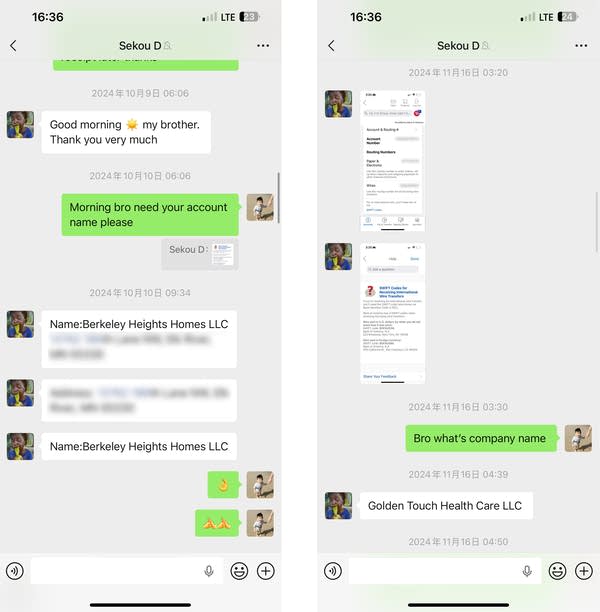
“So can you answer my question: ‘Where did you use the money for?’” Yang said, referring to Dukuly, in an interview with MPR News and APM Reports. “I want to sue (for) everything.”
Yang claimed he also bought Dukuly and his associates “luxurious goods,” including jewelry, clothes, shoes and electronics. Dukuly’s lawyers responded that he bought his Rolex watches with his own money.
In October, police in Liberia announced they had investigated Yang’s complaints against Dukuly and found no evidence of criminal conduct, just a business dispute. Earlier last year Dukuly’s attorney made a complaint to the police against Yang. In response, officers arrested Yang and nearly deported him. The two men are now embroiled in a lawsuit over control of the water bottling plant. Dukuly wrote in a text message that he has a libel suit against Yang as well.
Yang is not the first to question where Dukuly’s money has gone. Years earlier, as Dukuly was first building out his group home business, he misrepresented his finances to the Minnesota court system.
In 2018, Dukuly’s first wife, Sheriff, brought a child support case against him. Dukuly said he had little in terms of income. The only earnings he reported on his 2017 taxes were the $13,400 he claimed he earned driving a taxi.
But the court grew skeptical of his claims of poverty. Anna Andow, a child support magistrate, asked to look over tax and bank records herself. Andow pointed out that Williams, Dukuly’s early business partner, had prepared his tax return and somehow made all of his group home income disappear.
“The court questions the accuracy of the documents,” Andow wrote. Williams did not respond to requests for comment.
When she reviewed Golden Touch Health Care’s bank records, Andow found sizable deposits, totaling more than $400,000 in just the first half of 2018. On the other side of the ledger, Andow found what “seem to be personal expenses rather than business expenses,” including a recurring gym membership at an upscale Life Time athletic club, Uber trips, Caribou Coffee and fast food charges, purchases at the luxury clothing store Opitz Outlet and other payments “that remain to be explained as to how they are business expenses.”
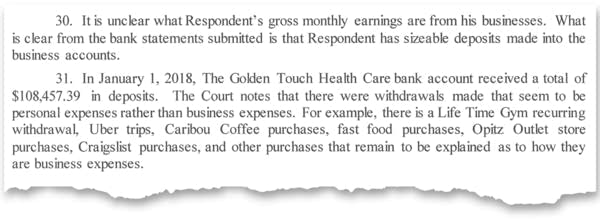
The magistrate ultimately estimated that Dukuly’s income was nearly $180,000 a year — five times what he had claimed in a sworn affidavit.
“He hid everything from me,” Sheriff said in an interview.
By March 2022, when Dukuly was back in family court for his second divorce, he’d bought three group home properties in Brooklyn Park and two in New Hope, plus a five-bedroom home in Osseo with a sale price of nearly $500,000. He had also declared an ownership stake in at least four group home companies that were collectively bringing in millions of dollars annually from taxpayers, state records show.
In court filings, however, Dukuly swore under penalty of perjury that he and Masoma Saybah, his second wife, had only $7,500 in the bank. He claimed that he owned no businesses nor real estate. By his numbers, Dukuly was earning only around $60,000 a year.
Dukuly disclosed just one significant asset: his vehicle, a 2019 Mercedes-AMG G 63, which he estimated was worth $110,000.

The joint divorce petition also stated that the couple had no children, avoiding another child support battle. But a 2017 state health insurance application filed in Dukuly’s child support case with Sheriff indicated he and Saybah had a child together.
Saybah now lives in a cramped basement apartment in Brooklyn Center with several young children. She told a reporter who visited her there that she had signed the paperwork for the divorce, but she added that she cannot read and speaks only minimal English.
‘I couldn’t leave him there’
One of the group home businesses linked to Dukuly attracted clients by advertising care that is “precious as gold and as warm as your personal touch” and boasted that its staff “have your care and security needs covered.” But local police reports, court records and state maltreatment investigations paint a darker picture of life inside many of those group homes.
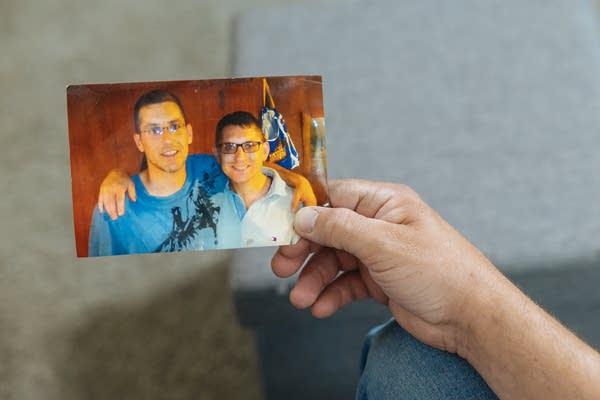
Before Muchko, three other residents died in group homes linked to Dukuly under circumstances serious enough to trigger state maltreatment investigations. All three were drug overdoses.
In 2023, Tammy Fremgen was found dead in her bedroom at one of those group homes in Brooklyn Park.
Her aunt, Kelly Farrier, and Fremgen’s daughter went to collect her belongings. Farrier remembered feeling horrified by the state of Fremgen’s room. Bags of trash were strewn around. The window was wide open, without a screen. Crumpled-up tin foil, a sign of drug use, lay visible on the furniture.
“It was horrific,” Farrier said. “We were just standing there in shock.”
Fremgen had been hospitalized repeatedly for her drug use during her time at Berkeley Heights Homes, so employees should have been familiar with her history of addiction. The Minnesota Department of Health later determined that the group home failed to supervise her adequately.
“I get so mad at that group home,” Farrier said, her words catching in her throat. Farrier worked in a group home herself for more than 30 years before retiring.
“You’ve got to watch the people,” she said. “That’s why you got the job. You are taking care of these people.”

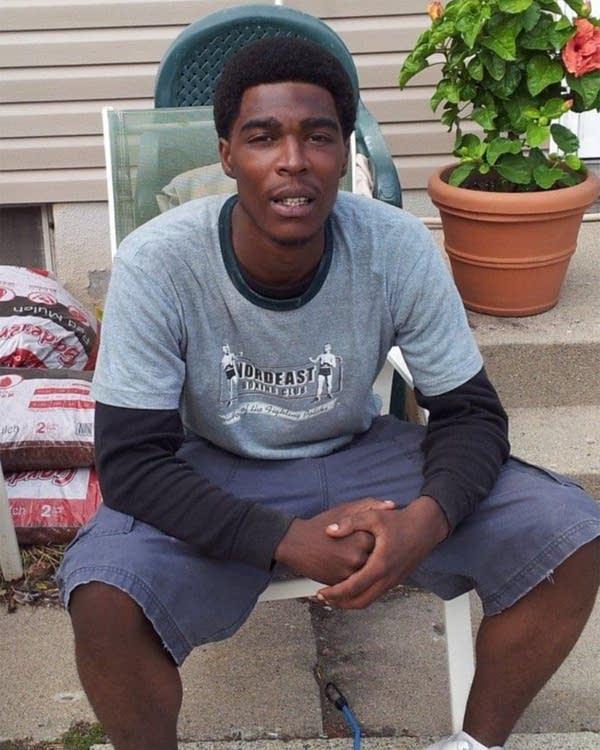
The state also determined a Dukuly-affiliated group home neglected Ollie Bickham before he died. Diagnosed with schizophrenia, Bickham overdosed twice in a week at a Brooklyn Park group home. He received a lifesaving dose of naloxone from another resident, not the staff who were supposed to be supervising him.
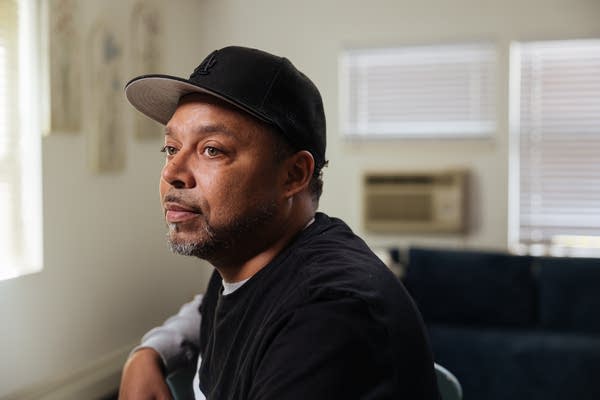
“I couldn’t just leave him there,” said Lenza Robinson, Bickham’s older brother.
Robinson moved his brother into a spare bedroom in his home. A few months later, Robinson found him there dead, overdosed on fentanyl — the same drug doctors suspected Bickham had been using in the group home. The state concluded the group home discharged him improperly. In an interview with state investigators, the case manager said Bickham’s death could have been prevented if the facility had just increased supervision.
Even in non-fatal cases, state and local government records reveal other serious problems at group homes linked to Dukuly.
In 2021, court records show a twice-convicted sex offender living in one of those group homes in Brooklyn Park brought a woman back to his room and allegedly raped her. The woman lived in a nearby group home linked to Williams, Dukuly’s sometime business partner. She was vulnerable to sexual exploitation because of a traumatic brain injury, according to state records.
In a lawsuit, her mother claimed Golden Touch had acted negligently when staff left her unsupervised in a room with a sex offender. Dukuly and Williams settled with the mother out of court. The mother declined to comment for this story. A judge found the sex offender incompetent to stand trial.
Another night at a Dukuly-affiliated group home in Brooklyn Park, the only staff member working took off in the middle of their shift, leaving five vulnerable adults who required 24/7 care unattended, according to a maltreatment investigation. During the unsupervised hour and a half, police responded to a 911 call from a resident who said their housemate had punched a hole in a door, broke a bathroom mirror and pulled an outlet out of the wall.
Police reports note staff at some of the group homes at times seemed ill-equipped to handle clients’ needs. In April, police showed up at a Golden Touch group home to find a man experiencing a mental health crisis. Holding a broken glass cup, he said he wanted to hurt himself. “Shoot me,” he told the police. “Kill me.” Officers told the man they cared about him and didn’t want that to happen. But as they were escorting him out to go to the hospital, staff "were amping the situation up, were making jokes, and mocking" him, the report noted.
Kathryn Glorvick and her husband used to live next to a Dukuly-owned group home in Brooklyn Park. They witnessed a resident threaten a neighbor and what they described as drug deals. But when Glorvick tried to contact Dukuly about the problems, “he told us to mind your own fucking business,” she recalled.
When the Glorvicks decided to put their house on the market, Dukuly approached their real estate agent with an offer above the home’s listing price of $260,000, all in cash. The Glorvicks refused.
“I didn’t want them to buy our house and have two houses,“ she said. “They didn’t respect us when we were living in that house.”
‘Most vulnerable are paying the price’
Seeing the mounting problems, one city tried to stop Dukuly-linked businesses from operating within its borders — but the move ultimately backfired, helping to inspire a law that now prevents cities from shutting down problem group homes.
Police in New Hope were responding to frequent 911 calls about two group homes controlled by Sekou and Sheikh Dukuly, including noise violations, fights, overdoses and one instance where staff found a gun in a resident’s room. In total, local police said they responded to the two addresses 133 times in a single year.
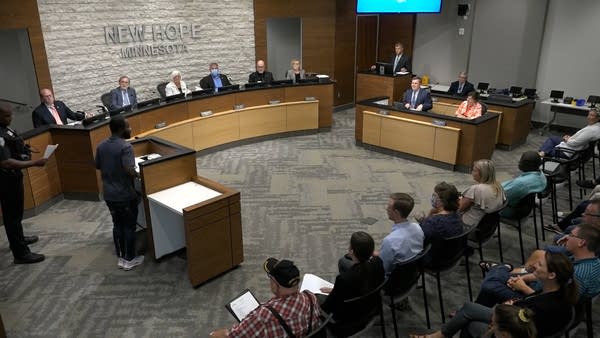
The 2022 death of Jake Zahradka, a resident at one of the facilities, finally led New Hope’s city council to revoke the rental licenses that allowed those group homes to operate within city limits. At the time, local governments could require group homes to go through the same licensing process as apartment buildings and other rental properties.
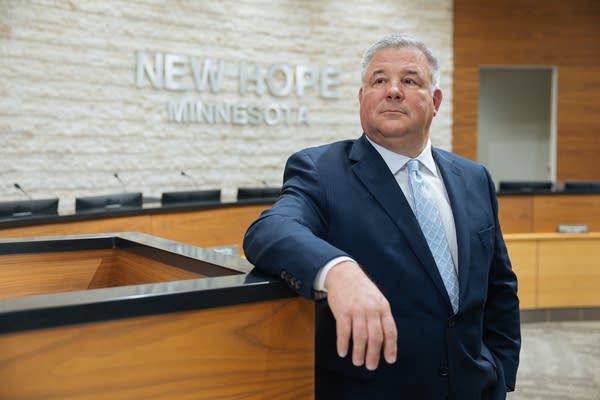
“We saw the problem; we tried to remedy the problem,” New Hope Mayor John Elder said. “We’re absolutely not anti-group home,” he added, but the Dukulys “weren’t willing to address the challenges, the issues.”
The Dukulys fought back. Sheikh Dukuly accused the city council of racism and of discriminating against his disabled residents.
“These people are not regular tenants,” he told KSTP in an interview at the time. “These are mental health people. They should be given the opportunity to lead normal, meaningful lives.”
The Dukulys sold one of their chains of group homes, including the New Hope properties, to another provider. Court documents report the price was $3.5 million. But the Dukulys thought the group homes were worth far more, claiming the city’s action cost them close to $2 million. They filed unsuccessful lawsuits in both state and federal court.
Sheikh Dukuly is still the licensed assisted living director in charge of those facilities. He declined an interview request. “I am a public servant. I’m a community health worker, so I don’t shy away from having a conversation,” Sheikh said during a brief phone call. “I work 16 hours a day, 7 days a week. I honestly do not have the time right now to have an interview.” In a subsequent email he wrote that records documenting his involvement in the group home industry “speak for themselves and do not require further characterization from me.”
While the courts didn’t give credence to the Dukulys’ complaints against the city, state legislators took them seriously.
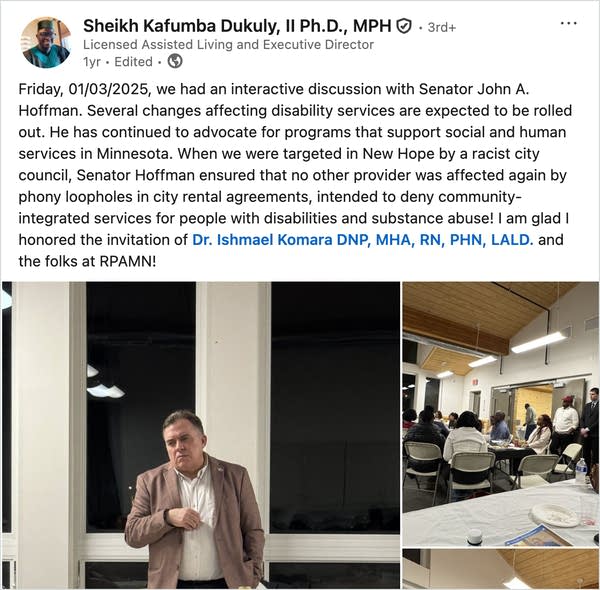
In 2024, state lawmakers stripped cities of the power to shut down group homes — something only the state can do now. Sheikh Dukuly celebrated the law in a LinkedIn post, saying it would end the “phony loopholes … intended to deny community-integrated services for people with disabilities and substance abuse.”
Cities in Minneapolis’s northwestern suburbs, overwhelmed by the concentration of group homes, have united to push back on the law. They’ve argued that it allows problematic facilities, like those linked to Sekou Dukuly, to operate with near-impunity.
“We’re supposed to have these checks and balances. That’s obviously not happening,” Elder said, and “some of our most vulnerable are paying the price.”