Deaths, neglect, calls for help: Group home boom overwhelms a Twin Cities suburb
Taxpayer-funded group homes help thousands of Minnesotans with physical or mental disabilities live as independently as possible. But the industry’s rapid growth in the Twin Cities’ northwestern suburbs has led to problems that leave vulnerable people in danger and local governments struggling with the consequences. Nowhere is that clearer than in Brooklyn Park, the state’s group home capital.
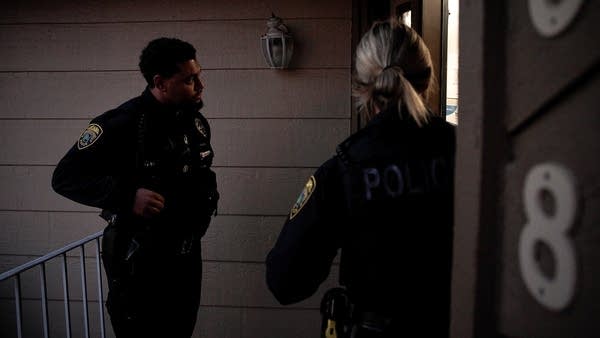
Officer Jessica Heinzen heard the call come in from Brooklyn Park dispatch about a man “likely on drugs” threatening his roommates. She recognized the man’s name and the address of the group home where he lived, and she was not surprised.
Arriving at the house, a group home worker told her the man had walked off after acting erratically for days. His case manager recently quit and he was skipping his antipsychotics for street drugs, the worker explained. He’d been sleeping in the kitchen because he thought the devil was in his room.
His file showed a diagnosis of paranoia, schizophrenia and alcoholism, but there was little Heinzen could do.
“I understand your hands are kind of tied just as much as ours are with trying to find the best resolutions for him,” Heinzen told the worker. “If he comes back, give us a call.”
Back in her squad car, Heinzen wrote it down as another of the thousands of calls Brooklyn Park police respond to each year involving group home residents who desperately need help from someone, just not the police.
“There’s been days where I probably go to 10 group home calls,” Heinzen said, adding that she gets at least two such calls every shift. “Sometimes we truly cannot find the resolution for what these people need.”
Largely funded by taxpayer money, group homes help thousands of Minnesotans with mental, cognitive or physical disabilities live as independently as possible. But the industry’s rapid growth in recent years has led to problems that are leaving vulnerable people in danger and local governments struggling with the consequences.
Since 2020, more than 900 houses in Minnesota have been transformed into group homes, an increase of 20 percent. Much of that growth has been concentrated in the northwestern suburbs of Minneapolis, including Brooklyn Center, Crystal and New Hope.
But Brooklyn Park is the epicenter of Minnesota’s group home boom. Some 300 group homes are licensed to operate there, more than any other city in the state, including Minneapolis and St. Paul, the state’s largest cities.
The state paid out more than half a billion dollars last fiscal year to group home companies licensed to operate in Brooklyn Park, according to Minnesota Open Checkbook, a state website that provides transparency in government spending. Payments to those companies increased from more than $300 million in the state’s 2020 fiscal year to more than $500 million in 2025.
The city estimates it’s spending $3 million to $5 million annually on police calls and other costs connected to group homes. Brooklyn Park police say about 10 percent of the 911 calls they handle now originate from group homes. Officers came to one group home 88 times in a year — more than once a week, on average.

MPR News and its national investigative journalism unit, APM Reports, examined hundreds of reports generated by those frequent encounters with law enforcement along with maltreatment investigation reports published by the state. Together they open a window into life inside some of these homes that would otherwise be shrouded by privacy laws.
At least 12 residents of Brooklyn Park group homes have died since late 2022. In three of those cases, the state found that maltreatment by the group home or its staff contributed to the death. Two of those were drug overdoses. One was a severe infection. In a separate incident, the state found that a group home had improperly discharged a resident who had overdosed in the group home twice in the same week. The resident died from an overdose in the community a few weeks later.
Residents frequently go missing. One resident disappeared 27 times in 18 months. Another who went missing from a Brooklyn Park group home was found in Arizona.
Officers often encounter residents using narcotics, including methamphetamine and fentanyl. At one group home in Brooklyn Park, a staff member told state investigators two residents were only aggressive when they “mixed crack and vodka.” In two cases, group home workers were caught drunk driving vehicles with residents on board.
Police have also reported encountering staff who seemed to have minimal knowledge of their residents’ medical and psychological conditions. In one case, an officer wrote in a report that he was “unable to identify the difference between staff and clients.”
Local governments, however, have few tools to crack down on problematic group homes.
A change in state law in 2024 prohibited cities from revoking a group home’s rental license. Advocates for the law argued that municipal restrictions on group homes could violate the rights of disabled residents and limit their access to housing.
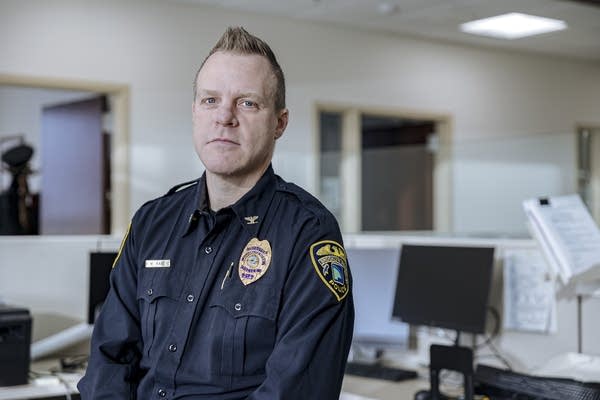
Brooklyn Park police inspector Matt Rabe says his officers have more contact with group home owners, staff and residents than anyone from the state.
“Unfortunately, it’s dumped on us, and it leads to burnout,” Rabe said. “The city of Brooklyn Park seems to be the holding place for problems people don’t know how to solve.”
Brooklyn Park mayor: ‘It’s maddening’
Brooklyn Park’s affordability makes it attractive to first time homebuyers — and group home businesses.
For years, the median cost of an existing single-family house in Brooklyn Park has trailed behind the wider Twin Cities area by tens of thousands of dollars. In 2025, the median sales price of a home in Brooklyn Park was around $350,000, compared to $389,000 in the Twin Cities, according to the Minneapolis Area Realtors’ annual housing market report.
Other qualities have made this city a magnet for group home businesses. City officials say the area has an abundant supply of one-level, rambler-style houses that are relatively easy to bring into compliance with the standards of the Americans with Disabilities Act. Its proximity to the urban core makes it easy for group home employees to use public transit to commute to work.
Many group homes in Brooklyn Park and beyond operate quietly and pose few problems for city police and state regulators.
But others have been the sites of alarming incidents in recent years, resulting in cases where the government concluded that Brooklyn Park residents were subjected to maltreatment, according to investigation reports from the Department of Human Services and Department of Health.
At Armstrong Homes, a suicidal resident was found dead in his room from a drug overdose. When police arrived, they said the resident was cold to the touch and rigor mortis had set in, suggesting that the death had occurred hours earlier. The group home company could not verify that staff had completed mandatory checks every two hours the night the resident died. Staff said the resident had grown increasingly agitated in the weeks leading up to his death, but his case manager said the facility did not report any concerns in a scheduled meeting days before he died.
At a Beacon Specialized Living group home in Brooklyn Park, a staff member mixed paprika and water and sprayed it into a resident's eyes and onto their genitals. It was unclear from the report why the employee would do that, but one coworker suggested it was an effort to make the resident go to sleep by making them keep their eyes shut. “As noted in the report, an employee reported their concerns about the isolated actions of another staff member through Beacon's established channels, and Beacon took immediate appropriate action,” Vice President of Operations Micki Ranallo Schaefer wrote in response to an email seeking comment.
At a Dungarvin group home, an employee drove residents to a sex store while drunk with a blood alcohol level double the legal limit. “It is always concerning to us when we are made aware of a situation that may not be aligned with our mission and our values as an organization,” CEO Lori Kress wrote in response to an email seeking comment, but she declined to answer questions about the incident, citing privacy concerns.
At an Epic Homes group home, officers found a resident out in the community in a drunken stupor three days in a row. On the third day, they found him lying in a puddle in 40-degree weather, his breathing labored and eyes rolled back in his head, with a potentially fatal blood alcohol level. He was hospitalized for 26 days and discharged back to the same group home.
As of March 2026, all of those group homes remain open and continue to receive money through the Minnesota Department of Human Services.
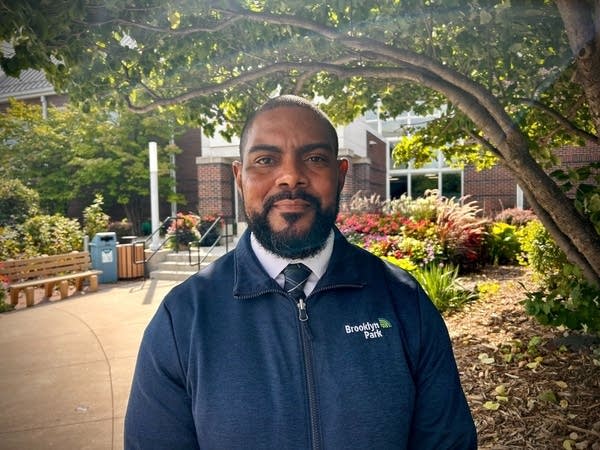
“We wouldn’t even let that happen in the prison system, but we’re allowing that to happen to the most vulnerable,” Brooklyn Park Mayor Hollies Winston said of the maltreatment cases in the city’s group homes. “This hasn’t been dealt with and now it’s right in front of us. It’s maddening.”
Incidents gleaned from Brooklyn Park police reports and interviews include a case where police arrived at a home owned by Fantum Health Services to find someone performing CPR on a resident.
The officer discovered that the person rendering aid was not an employee, but rather a friend of a staff member who asked the friend to cover their shift. The CPR was unsuccessful and the resident died. The staff member’s friend later pleaded guilty to giving police officers a false identity.
Police arriving at group homes report that staff at times appear ill-equipped to handle the complex challenges some residents pose.
In early 2022, officer Brandy Gelle and her partner responded to a group home where a resident was trying to attack other residents with a pair of scissors. In her report, Gelle wrote that staff members could not locate the woman’s file, did not know her diagnosis or who her case manager was. It was “apparent,” Gelle wrote, that the staff were unable to take care of the woman.
“Her placement at the group home is not appropriate,” Gelle wrote in her report.
State licensing ‘loophole’ led to business boom
Aspiring group home owners in Minnesota can seek licenses either from the Department of Human Services, which has historically overseen most of the industry, or the Department of Health, which has been driving the recent wave of growth. Regardless of the licensing agency, the funding flows through the Department of Human Services.
In 2009, state lawmakers voted to restrict the Department of Human Services from granting new licenses, because at the time the state believed the industry was growing too quickly.
Leaders in the group home industry countered that the licensing restrictions were unrealistic given the number of Minnesotans who needed help.
“Even back in 2009 the need was still growing,” said Josh Berg, service director for group home provider Accessible Space Inc., who lobbies the Legislature on behalf of the industry. “There are human lives that depend on this work.”
But the moratorium didn’t prevent the industry from growing. Providers were able to seek exemptions from the Department of Human Services or enter the industry under the auspices of the Department of Health. Today, those Health Department licenses are technically classified as “assisted living” facilities.
Since 2021, the number of group homes with those assisted living licenses has increased by 50 percent.
“Some providers may have used it as a loophole,” said Debbie Ackerman, human services area manager for Hennepin County.
Unlike with group homes licensed by the Department of Human Services, which are spread out geographically, growth in small assisted living facilities has tended to be concentrated in the northwestern Twin Cities suburbs.
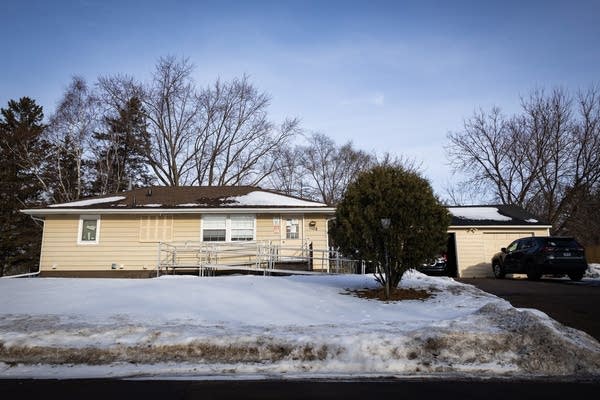
In response to a request for comment, a spokesman for the Health Department wrote that it “maintains good relationships with local officials and communicates the results of substantiated maltreatment investigations to both law enforcement as well as the controlling municipal attorney’s office.” It also said current law does not allow it to consider the number of nearby group homes when deciding whether to approve a license.
The Department of Human Services declined an interview and did not provide a statement by the time of this story's publication.
The growth of the industry in Hennepin County, which includes Brooklyn Park, has put a strain on the county’s human services department. In response, the state’s 2024 budget gave the county an extra $500,000 to hire additional staff, but Ackerman said the money “went very quickly for the amount of work that was needed.”
The two-track system for licensing group homes has also made it difficult for state regulators to monitor the growth of the industry.
Over several months, MPR News and APM Reports have sought data from the state agencies to determine how much the industry has grown and how much the state has paid providers.
The agencies struggled to provide clear answers, and the Department of Human Services provided payment data that did not match what it reported to the state’s Open Checkbook website.
In recent years, Minnesota has faced scrutiny over fraud in its social services sector. Federal prosecutors say an organization called Feeding Our Future stole some $250 million in federal funds meant to feed hungry children. That scandal has spurred allegations of more widespread fraud, which the Trump administration used as a basis to threaten Minnesota’s Medicaid funding and conduct a massive crackdown on immigrant communities in the state.

‘What’s a long-term solution?’
There are efforts underway to slow the group home industry’s expansion.
Using new anti-fraud powers, the Department of Human Services announced a two-year pause on new licenses for home- and community-based services, which include group homes. It went into effect at the beginning of January.
The department said the two-year pause would allow the government to evaluate whether additional reforms were needed to improve oversight. However, businesses that wish to open group homes could still get a license to do so from the Minnesota Department of Health.
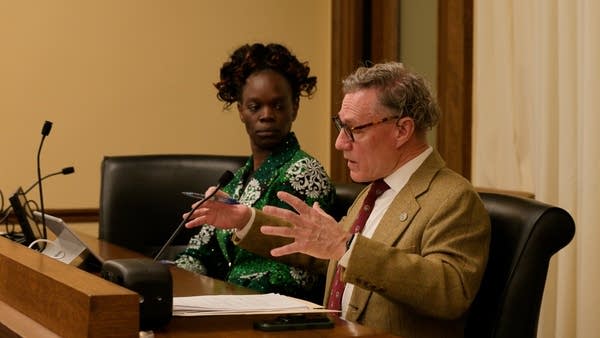
At the start of the 2026 session, mayors and other local officials in the northwestern Twin Cities suburbs put together a legislative proposal to prevent the Health Department from licensing new group homes within 650 feet of any existing group home.
“We can’t allow cul-de-sacs and neighborhoods to be institutionalized,” said Rep. Danny Nadeau, R-Rogers, who authored the bill.
But in a hearing last week, the proposal met with resistance from the industry and some other legislators.
“It's been painted pretty clearly today that the root cause of the issues that cities are experiencing are not being addressed today,” said Rep. Brion Curran, DFL-White Bear Lake, during a hearing about Nadeau’s bill in the House.
As they await help from the state, police in Brooklyn Park and other Twin Cities suburbs with large numbers of group homes are working more closely to share information and train in de-escalation strategies.
Brooklyn Park’s community health unit has taken a larger role in trying to address chronic group home calls. It created information sheets that detail an individual resident’s diagnoses and medications, how they want to be addressed and their past interactions with first responders.
But when a 911 call comes, police say they don’t really have the tools they need.
“We are either sending someone to the hospital or we are sending them to jail,” said Rabe, the Brooklyn Park police inspector. “We don’t have another option.”
As lawmakers, state agencies and city leaders grapple with the growing crisis, officers continue to do what they can.
On a shift with a reporter riding along, Heinzen helped calm a resident who was experiencing a mental health crisis. The woman had been suicidal in the past. Police had responded to the group home 23 times in the previous three months.
“Last time I was here, you wanted to go to the hospital. I complimented your pants,” Heinzen told the resident. “You had the Grinch pants on. … They’re cute. I love the Grinch.”
Heinzen promised the resident she’d try to drive past her group home a few extra times on her shift. Otherwise there was not much more she could do.
“I can sit and talk to people all day. I love talking to people. That’s one part of this job that I love,” she said. “But what’s a long-term solution?”
Data journalists Alyson Clary and Kate Martin contributed to this report.