On the Iron Range, investigations have created tension between Mesabi Academy and St. Louis County. Job loss, though, was the main concern when county commissioners discouraged a health and human services leader from ending a critical contract with the company.
In 1987 an educator frustrated with American school reform challenged Outward Bound to get more involved in the debate about the direction of public education. He thought American schools could learn from Outward Bound's focus on experiential learning and on teaching skills like resilience and collaboration.
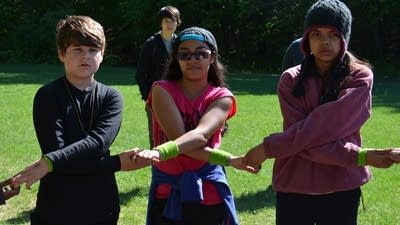
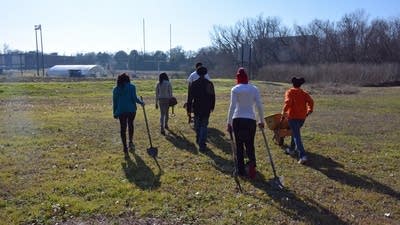
One of the features of education at many Expeditionary Learning schools is an Outward Bound trip. See photos of one of these trips and read an interview with two principals about why they send their students outside and how it relates to what they’re trying to do in the classroom.
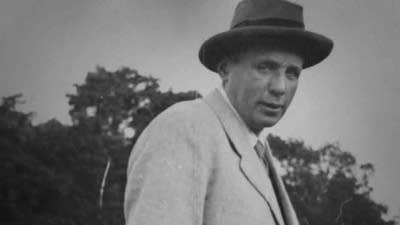
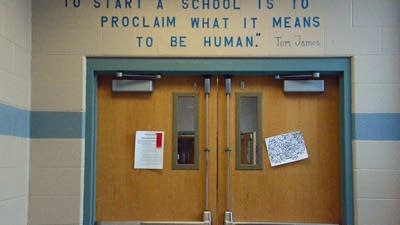
Early in his life, Kurt Hahn had a vision of the kind of school he wanted to create, and it was nothing like the school he went to. It would be a school designed to help kids discover their interests and passions, not just prepare them for tests. And it would be a school devoted to character development.
There's a lot of talk these days about the importance of traits like grit, curiosity, and self-discipline — so-called "non-cognitive skills." How can schools teach those skills? Correspondent Emily Hanford explores the approach to character development at one school in Massachusetts.
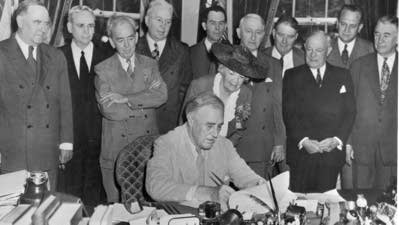
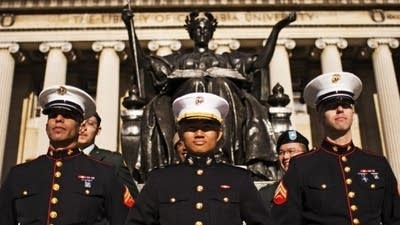
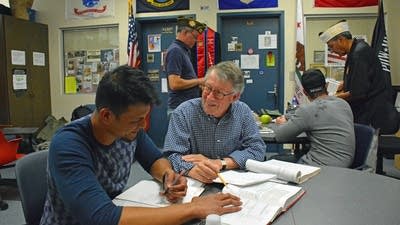
A staggering 16 million soldiers returned home from World War II, and millions of them went to school. Because GI Bill benefits were generous enough to pay for any college in the country, veterans flooded all types of institutions, from elite schools like Harvard to large state schools, to vocational schools. By 1947, half of all college students in America were veterans.
The Post-9/11 GI Bill was supposed to change where veterans could go to college by giving them more money, and, therefore, more options. But since the new bill went into effect in 2009, the percentage of veterans enrolling at four-year public and private nonprofit schools has barely budged.
In the United States, teaching isn't treated as a profession that requires extensive training like law or medicine. Teaching is seen as something you can figure out on your own, if you have a natural gift for it. But looking for gifted people won't work to fill the nation's classrooms with teachers who know what they're doing.
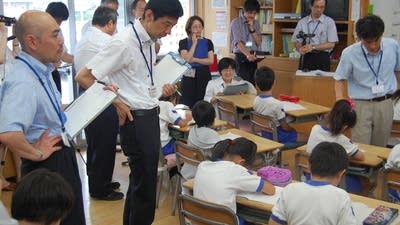
In 1993, a group of researchers set out to do something that had never been done before. They would hire a videographer to travel across the United States and record a random sample of eighth-grade math classes. What they found revealed a lot about American teaching.
"What you do when you’re teaching is you think about other people’s thinking. You don’t think about your own thinking; you think what other people think. That’s really hard." -Deborah Ball
In the United States, we tend to think that improving education is about improving teachers - recruiting better ones, firing bad ones. But the Japanese think about improving teaching. It's a very different idea.
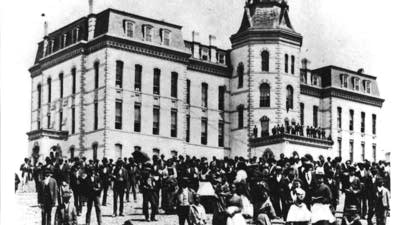
Paul Quinn College was a sorry sight when Michael Sorrell, the school's fifth president in as many years, drove onto the Dallas campus to see what he was dealing with. As Sorrell looked around campus, he had one thought. How do you save a school that everyone thinks is already dead?
Lysious Ogolo is an audio production major at Howard University. He's originally from Nigeria, and moved to the United States with his family in 2008 when he was 18 years old.
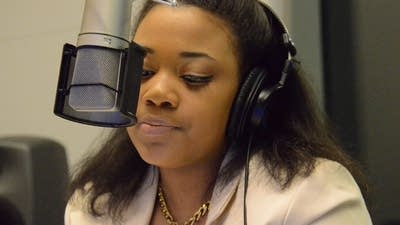
Lilian Spriggs is an audio production major at Howard University, from Jackson, Mississippi. After graduation, she wants to work as an on-air personality at a radio station.
Zach Hubert came out of slavery with an adage that he would pass on to his children, and his children's children, and their children down the line. "Get your education," he would always say to them when his family gathered together in later years. "It's the one thing they can't take away from you."
When Franklin D. Roosevelt was elected president in 1932, he and first lady Eleanor Roosevelt both used the new medium of radio to reach into American homes like never before.
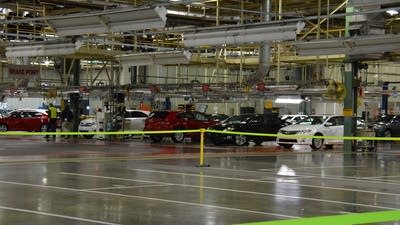
At a Toyota plant in Kentucky, young people are learning how to fix robots, earning associate's degrees and graduating with jobs that pay up to $80,000 a year.
For years, vocational education was seen as a lesser form of schooling, tracking some kids into programs that ended up limiting their future opportunities. Today, in the nation's best vocational programs, things are different.
Across the country, thousands of high schools are transforming into career academies. The idea is that students will be more engaged if they see how academics are connected to the world of work. And they’ll be more likely to get the postsecondary schooling they need to support themselves in today’s economy.
Vocational education was once used to track low-income students off to work while wealthier kids went to college. But advocates for today's career and technical education say things have changed, and graduates of vocational programs may have the advantage over graduates of traditional high schools.
Colleges and universities are accepting many more students of color, many more students from working class and poor families, and many more people who are sometimes referred to as "nontraditional" students.
Since 1982 Heritage University, in Eastern Washington's Yakima Valley, has made it its mission to educate some of the poorest, most isolated students in the country.
University of Texas at El Paso President Diana Natalicio has a problem with the "nontraditional student." She doesn't like the term. "It suggests that you're not something, rather than that you are something new," she says.