Federal immigration agents waited three minutes to call 911 after one of their officers shot Renee Macklin Good in Minneapolis. After a brief medical assessment, they left her bleeding in her car. Agents didn’t give her CPR and turned away the help of a man who said he was a doctor.
A company allegedly used to launder money stolen from the government in the Feeding Our Future fraud case owns at least five houses where taxpayer-funded group homes operate. Those group homes have collected millions of dollars from the government.
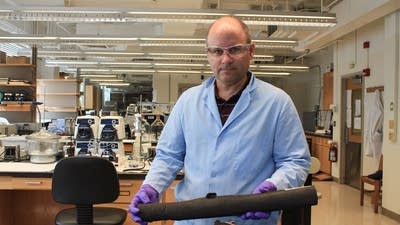
In 2017, the Tubbs Fire in Santa Rosa, California, exposed a new threat to public health: Wildfires can contaminate drinking water with toxic chemicals which federally mandated testing is not designed to catch. Into that regulatory void has stepped Andrew Whelton, an engineering professor at Purdue University who has made it his personal mission to help water utilities recover after devastating fires.
Nursing homes are designed to care for patients with physical infirmities. But nationwide, 1 in 5 residents has been diagnosed with a serious mental illness, such as schizophrenia or psychosis — conditions few of the facilities are equipped to handle. A new data analysis from APM Research Lab shows that can lead to higher levels of abuse, putting both residents and staff at risk.
Some people say antidepressants left them with debilitating symptoms for years — even decades — after going off the medications. Their ranks are growing online as they push for recognition and research.
Alaska’s Legislature adjourned last week without addressing an issue that many residents of coastal, Native villages see as urgent: expanding access to commercial fishing careers.
U.S. District Court Judge Richard G. Stearns ruled that the lawsuit against educational publisher Heinemann and three of its top authors was invalidated by a legal doctrine that bars claims of “educational malpractice.”
Five years after George Floyd’s killing set off nights of destruction, vacant lots and broken buildings remain along Lake Street and other Minneapolis business districts. Some business owners say money woes and city zoning rules have made it hard to rebuild.
A permitting system designed in the 1970s was supposed to make Alaska’s commercial fishing industry more sustainable and more profitable. But over the past 50 years, it has hollowed out many Indigenous coastal villages where residents no longer can earn a living by harvesting salmon.
A class-action lawsuit filed in Massachusetts claims that the educational publishing company Heinemann falsely advertised its products as “research-backed” and “data-based.”
In spite of years of pressure from advocates, access to emergency contraceptives remains difficult for women who rely on the health care systems run by or on behalf of their tribal nations. APM Reports spent more than six months surveying tribal clinics and pharmacies around the country. Dozens refuse to provide Plan B — or impose restrictions.
In one of America's deadliest cities, police have struggled to solve killings due to staffing shortages, shoddy detective work and lack of community trust.
The educational publisher raked in hundreds of millions of dollars in revenue during the 2010s selling reading programs based on a disproven theory. The company now faces financial fallout, as schools ditch its products.