Feeding Our Future defendant connected to taxpayer-funded group homes in Twin Cities
A company allegedly used to launder money stolen from the government in the Feeding Our Future fraud case owns at least five houses where taxpayer-funded group homes operate. Those group homes have collected millions of dollars from the government.
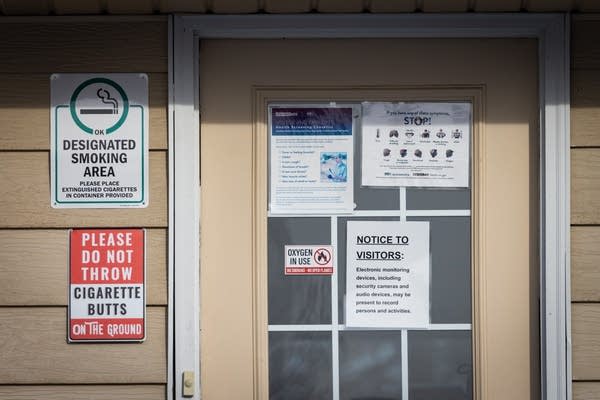
A company federal prosecutors claim was used to launder money for the Feeding Our Future fraud scheme owns properties throughout the Twin Cities where taxpayer-funded group homes operate.
GAK Properties LLC owns at least five houses that function as group homes for Minnesotans with disabilities. Federal prosecutors allege that Gandi Abdi Kediye used the same company to launder nearly $1 million in Federal Child Nutrition Program funds during the pandemic. He was indicted in early 2024 and has pleaded not guilty. The group homes, three of which are managed by Kediye’s wife, have billed the state for millions of dollars in the two years since his indictment.
Although several of Kediye’s relatives were also charged in the Feeding Our Future scheme, his wife, Samsam Mohamed, was not. Because of that, the Minnesota Department of Health, which licenses the group homes, and the Minnesota Department of Human Services, which disburses their funding, say they have no legal basis to take action against the group homes.
Kediye set up GAK Properties about a month before prosecutors say his involvement in the Feeding our Future conspiracy began. Public records show that Kediye purchased one of the five GAK Properties houses after his indictment for money laundering and wire fraud.
Kediye is also tied to two other group home properties purchased after his indictment. Tax records show one remains in his name. His wife, Mohamed, purchased one in her name as well.
The group home company managed by Mohamed has the same mailing address as the offices of GAK Properties and another of Kediye’s companies accused of money laundering.
Another group home in a house GAK Properties owns was run by Kediye’s sister, Ikram Mohamed, at the time she was indicted as a co-defendant for her alleged part in the Feeding Our Future fraud scheme. She no longer manages that home.
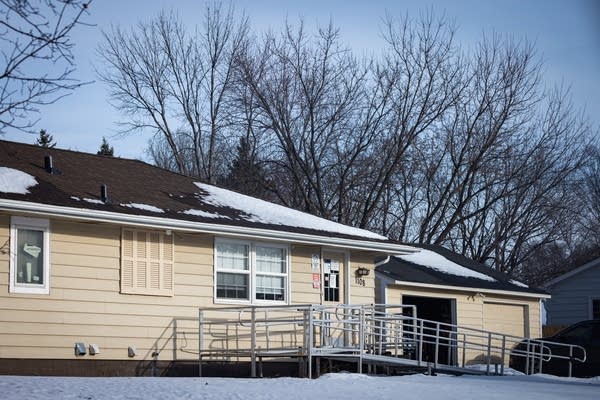
MPR News and APM Reports identified group homes operating on property owned by Kediye and his company in Minneapolis, Brooklyn Park, Richfield and Bloomington. Group homes are typically single-family houses where several people live together with supervision from staff, usually due to mental or physical disabilities. Group home businesses are eligible for state and federal funding including Medicaid.
According to Minnesota Open Checkbook, a state website that provides transparency in government spending, three businesses operating out of seven properties affiliated with Kediye received over $9.4 million from the Minnesota Department of Human Services, including $4.5 million since 2024, the year he was indicted. A spokesperson for the Department of Human Services would not confirm the accuracy of these figures.
MPR News and APM Reports spoke to staff members and residents at two of the group homes in buildings owned by GAK Properties. They confirmed Samsam Mohamed runs the group homes and said her husband’s name is Gandi.
While prosecutors claim that those involved in the Feeding Our Future fraud scam failed to provide much of the food for which they claimed reimbursement, the group homes visited by MPR News appeared to be operational. A resident at one of the Brooklyn Park properties said he has lived at the group home since 2020 and has enjoyed living there.
“The checks and balances of the system have to work,” said Toby Pearson, the president and CEO of Care Providers, a member organization for long-term care providers, including assisted living facilities.
“Just because somebody may be a landlord and have a related party as a provider does not inherently make it wrong, but the system also has to double-check to make sure that things are operating correctly,” Pearson said.
MPR News and APM Reports asked to speak with Kediye about his properties through his lawyer, Nicholas Kaizer. In an emailed statement, Kaizer said Kediye has no involvement in operating any care facilities. He said being charged by indictment “does not strip a person of the right to own real estate and lease it at fair market value.”
Following Kediye’s indictment, the Minnesota Reformer reported that he also owned Comfort Services LLC, a home health care service that had received more than $40 million from DHS since 2016. Shireen Gandhi, the Department of Human Services’ temporary commissioner, said in a statement that Comfort Services is under investigation and payments are being withheld.
Samsam Mohamed did not respond to a call and multiple emails requesting comment.
In his statement, Kaizer said his firm does not represent Samsam Mohamed, and said “we are aware of no allegation concerning any impropriety concerning her lawful, licensed operation of any care facility. She is an educated, trained and compassionate caregiver” who should not be “tarred and feathered merely because of an association to her husband and the Minnesota Somali community.”
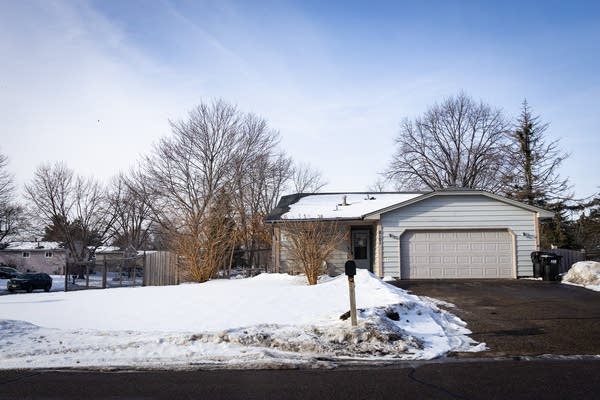
The Minnesota Department of Health licenses certain group homes, including all of those affiliated with Kediye, as assisted living facilities. In Minnesota, group homes can also be licensed through the Department of Human Services as community residential settings, but all group homes are funded through DHS.
Andrea Ahneman, a communications advisor at the Department of Health, wrote that the agency doesn’t have the authority to deny someone a license based on the actions of family members or other associates.
“The health, safety and wellbeing of residents and staff is top priority for the Minnesota Department of Health,” and the agency does a thorough review of assisted living facility applications, Ahneman said.
In response to emailed questions, a spokesperson for the Department of Human Services said the agency could not disclose whether it was aware of connections between Feeding Our Future defendants and the group homes it funds.
DHS reviewed the names of people indicted in the Feeding Our Future scheme for connections to agency programs and has taken action in some cases, the spokesperson said, “but DHS is statutorily limited on when it can act to cut off funding.”
“On its own, Mr. Kediye being a landlord for the property of the three companies would not be enough for DHS to withhold payment,” the spokesperson said.
Kediye’s family’s role in Feeding Our Future, explained
Kediye and his family members were indicted in 2024 for their alleged role in the Feeding Our Future fraud scheme, in which 78 defendants were accused of stealing hundreds of millions of dollars in federal funds meant to feed children from low-income households during the pandemic. The Minnesota U.S. Attorney’s Office called it “the single largest COVID-19 fraud scheme in the country.”
Prosecutors allege that Kediye and his co-defendants claimed to have served 4.8 million meals but instead pocketed more than $12 million in federal funds.
Kediye changed his name from Gandi Yusuf Mohamed in April 2023, before he was indicted. Prosecutors used his former name in the indictment.
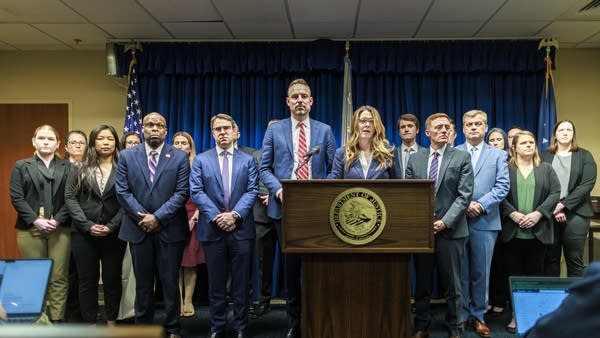
Prosecutors said Kediye’s sister Ikram Mohamed, as a consultant for Feeding Our Future, signed up family members including her mother, siblings and husband, to open fraudulent meal distribution sites. Using federal funds, Feeding Our Future then allegedly paid the sites’ operators for meals that they never served. Federal prosecutors contend that the family laundered some of that money through GAK Properties and disguised the transactions as “rent.”
Kediye used the money to buy more real estate, and Ikram Mohamed paid off a GMC Yukon SUV, ordered Doordash deliveries daily, and spent on travel and other lifestyle splurges, according to federal investigators.
MPR News and APM Reports sought comment from Ikram Mohamed through her lawyers, who said in an email that their client “looks forward to being vindicated at trial.”
In total, prosecutors said Kediye received and laundered more than $1.1 million in Federal Child Nutrition Program funds between March 2021 and July 2022. He has pleaded not guilty. In a legal brief filed this month, his lawyers argued his involvement was “limited.” A trial is scheduled for next April.
Group homes and ‘political theater’
The new details on Kediye’s properties follow information presented by Rep. Kristin Robbins, R-Maple Grove, at a Fraud Prevention and State Agency Oversight Committee hearing earlier this month. Robbins, who chairs the committee and is running for governor in 2026, said her team found connections between a Feeding Our Future defendant and active assisted living businesses, but she did not identify them.

In an interview, Robbins confirmed that MPR News and APM Reports’ findings matched her team’s discoveries.
“I think anyone indicted under Feeding Our Future should not be getting any additional state money,” Robbins said.
So far there is no indication that GAK Properties is directly receiving state money. It owns the buildings but not the businesses receiving government funding.
After the hearing, Democratic leaders accused Robbins of withholding and then disclosing leads in order to score political points.
“If there is fraud, it needs to be investigated immediately — not sat on, redirected or used for political theater,” Gov. Tim Walz said in a statement.
A new state law and executive order signed by Walz recently gave DHS more power to investigate fraud allegations.
“I would hope that elected officials, or anybody in state government that has allegations that we can use to shut off money when they suspect fraud, would refer them to me so that I can take action,” James Clark, the inspector general for DHS, said after hearing Robbins’ presentation earlier this month. “I do not want to see a single dollar lost to fraud and will do everything in my power to stop that from happening.”
MPR News correspondent Matt Sepic contributed to this story.