Utah officials order Provo Canyon School's girls program to close by August
State regulators say the facility failed to protect clients from harm, allowed neglect and used unnecessary restraints. The program can appeal.
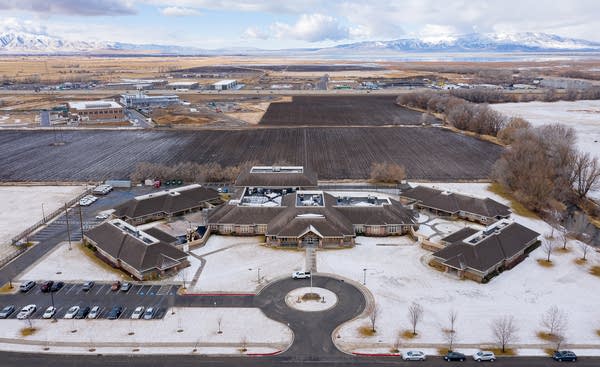
Utah officials are shutting down Provo Canyon School’s girls program — one of the state’s most notorious teen treatment programs, which has been plagued by abuse allegations.
The action came after the state’s licensing agency received complaints last month from the nonprofit Disability Law Center, state officials said Tuesday. The program also had faced closure demands from former residents, including celebrity Paris Hilton.
The closure action is only for the Springville girls’ campus; Provo Canyon School’s boys program, in Provo, has been more closely monitored by state officials recently after a boy was seriously injured during a fight, but licensors have not taken any revocation action against that location.
Provo Canyon School has until Aug. 6 to move its clients from the Springville campus, according to a revocation letter sent Monday.
Provo Canyon School, which is owned by Universal Health Services, can appeal the revocation.
The program’s CEO, Tim Marshall, said in an email to The Salt Lake Tribune that the school’s leaders “disagree with the state’s decision” and are evaluating “all available legal and administrative options, including an appeal.”
“As this is an ongoing matter, we are limited in what we can say at this time,” he wrote. “Our priority remains providing safe, high-quality care and support for adolescents and their families, and we remain committed to serving those in need.”
State licensers wrote in that Monday letter to Provo Canyon School administrators that it was revoking the Springville license after it failed “to protect a client from harm,” failed to ensure “each client has the right be free from neglect,” and said staff had engaged in an “unnecessary restraint and aggressive physical contact with a client,” among other findings.
Provo Canyon School opened in 1971 and spurred an avalanche of imitators in the decades that followed, cementing Utah as the epicenter of what is often called the troubled-teen industry. States across the country send children to Utah to get help with a wide variety of mental and behavioral problems, ranging from depression to addiction to delinquency.
Utah has historically exercised relatively light regulation of those companies. But the state government has taken a firmer stance in recent years, following a campaign by Hilton and increased media scrutiny, including an investigative reporting partnership between The Salt Lake Tribune, KUER and APM Reports, which culminated in the 2022 podcast Sent Away.
The decision to close the Springville campus followed a June complaint from the Disability Law Center, said Shannon Thoman-Black, director of Utah’s Division of Licensing and Background Checks, at a news conference Tuesday.
The Disability Law Center is Utah’s protection and advocacy agency, a federal designation that allows the nonprofit to inspect and monitor conditions at facilities such as Provo Canyon School.
After receiving the complaint, Thoman-Black said the licensing agency took a closer look at the treatment center. Investigators found “multiple non-compliances” and instances in which the school failed to report — or reported but withheld — information that should have been disclosed to regulators, she said.
In its June complaint to the state, the Disability Law Center said visits to both Provo Canyon School campuses uncovered similar concerns. Children told investigators they felt unsafe in a chronically understaffed facility where violence, self-harm and inadequate medical care had become routine.
The Disability Law Center applauded the state’s decision in a statement on Tuesday but said “we remain highly concerned about the health and safety of the children at the boys’ campus in Provo, and implore the State to take continued action to ensure their wellbeing.”
The center called on state leaders to make reforms, saying, “in the future, we urge the Department not to wait until the harm rises to the level it has at PCS before taking whatever action is necessary to protect children.”
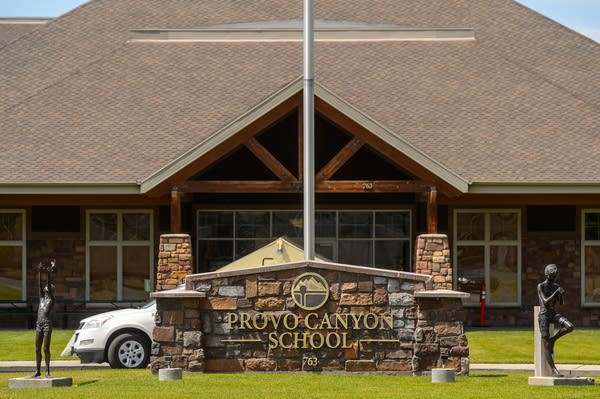
Thoman-Black said the Utah Department of Health and Human Services will work to move teens out of the Springville campus before the Aug. 6 deadline, either back home or to another treatment center. They cannot be transferred to the Provo campus because that facility is barred from accepting new teens under restrictions on its license.
For the next month, Thoman-Black said the state licensing agency will continue to conduct weekly inspections at the facility.
“If we do identify areas of concern during these inspections, we will return as often as necessary to keep these clients safe,” Thoman-Black said.
Thoman-Black said the owners cannot apply for a new license for at least five years.
Provo Canyon School’s boys program has been under fire in recent weeks after a 13-year-old boy was seriously injured in a fight, and state regulators say staff didn’t call 911 or seek immediate medical care.
Since then, a chorus of voices has demanded the program’s closure — including state Sen. Jen Plumb, who, as a physician, initially treated the 13-year-old boy, and Paris Hilton, who went to Provo Canyon School in the 1990s when it was under different ownership and alleges she was abused there.
“Today, the state confirmed what survivors have known all along: Provo Canyon School failed the children in its care,” Hilton said Tuesday in a statement. “I know what it feels like to cry for help and believe no one is coming. Today, children still inside that facility know someone is finally coming to protect them.”

The “little girl in me who was told she would never be believed feels so validated today,” she said. “No institution is too powerful to be held accountable. When survivors refuse to stay silent, change is possible.”
The Springville campus got in trouble with state regulators last January, when officials say a staff member “struck” a child who was being restrained. At that time, staff told licensors they were hesitant to submit details about their restraints in writing, “since those documents are public.”
Thoman-Black said regulators did not shut down the Springville campus after the January complaint because the state’s first step is typically to work with facilities to bring them into compliance, rather than immediately revoke their licenses.
“There is also a risk if there is not a place for children to have service,” Thoman-Black said. “We don’t go in with a hammer when a scalpel will do.”