‘Dyslexia and the Reading Wars’: Emily Hanford's Conversation with The New Yorker’s David Owen
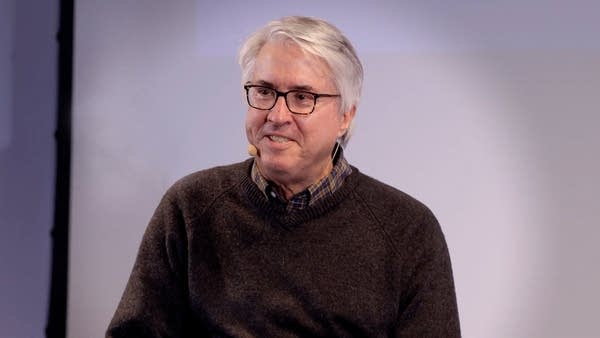
The New Yorker staff writer David Owen opened a recent piece with a personal story: To hide that she couldn't read, his niece would pretend she was reading, turning pages when her classmates did. Owen joined Sold a Story host Emily Hanford for a live conversation about his December 2025 article “Dyslexia and the Reading Wars.” The event was part of the Eyes on Reading series at Planet Word, a museum in Washington, D.C., dedicated to words and language.


Emily Hanford: Hi, it’s Emily. This is a special episode of Sold a Story. We're working on Season 2 right now, and I’m really excited for you to hear it. It's a whole new story about how learning works.
Interview 1: I couldn’t believe what I was seeing. The kids were excited and I was excited and I thought, this is the future.
Interview 2: If I had had that type of teaching throughout my life, I don't know where it would have taken me.
Interview 3: I just thought something's happened here that's new, that we haven't seen before. And should find out whether it can be replicated.
Hanford: And why research about learning often doesn’t make it into classrooms.
Interview 4: One educator has called the approach totalitarian. Another, horrible.
Interview 5: There was a terrific backlash against the program.
Interview 6: I find no evidence in the entire evaluation that they have anything special or worthy of wide distribution.
Interview 7: It was like, like a baseball bat to the head.
Hanford: Sold a Story, Season 2, is coming in September, but today we have something else I think you'll like.
Audio: Good evening! Welcome to Planet Word. Today ….
Hanford: Planet Word is a museum all about words and language in Washington D.C. I host a series of live conversations there about reading. You might have heard our last episode with teacher Margaret Goldberg and reading researcher Reid Lyon.
I was back at Planet Word recently, for a fascinating conversation with David Owen. He's a staff writer at The New Yorker, and in December, he wrote a story called “Dyslexia and the Reading Wars.” Here's our conversation.
Hanford: OK, so let's talk a little bit about being a writer first. And becoming a writer. So why are you a writer? Or like, When and how did you become one? Where does it begin?
David Owen: I think I pretty much always wanted to be a writer. For a while, I wanted to be a secret agent. I wanted to build a mini-sub. I wanted to be a soldier. I wanted to do various things. Then when I was in sixth grade, I decided I wanted to be a poet and then also, sort of also wanted to be a journalist, editing school newspapers and things like that. And when I got a little older, I was sort of concerned to see that all the contemporary poets that I admired seemed to be mentally ill. And I consoled myself, I think, “Well, maybe I'll become mentally ill at a later date.” It seems it's almost like a part of the job description, but then I sort of drifted entirely into journalism and got interested in that.
Decided I didn't want to teach. I had one experience of teaching, and I was a terrible teacher. I didn't really know how to grade people. And I had my grade list, I thought, “Oh, there are too many B's in a row,” and so I would add a plus and add a minus, but it was just ....
Hanford: Those are bad grades now too!
Owen: I know! They were OK then. But journalism has let me write, and I've been able to I know a little bit about a lot of things. I've written about a lot of different things, as you know, and always thought that the ideal college major for me would have been to take the introductory course in every department, and because the first year I loved in economics and philosophy. And then I would take the next one, and it's, “This is terrible. This is nothing like what 101 was.” So I ended up as an English major.
Hanford: But you knew in sixth grade that you wanted to be a writer?
Owen: Yeah.
Hanford: But why?
Owen: It just felt like something that I really had to do. You know poetry and those things, but then anything. And I think I would be happy writing angry letters to the editor.
Hanford: Well, you can retire.
Owen: Right exactly. If there are letters to the editor anymore.
Hanford: Well, here's you. What are we looking at?
Owen: This is high school newspaper. That's me over on that over there.
Hanford: Oh, see, I was gonna guess that was you actually.
Owen: No, that's a classmate, back when they were typewriters, manual typewriters.
Hanford: Right, yeah. And then we have this one. This, what's this?
Owen: This is in college. I went to two colleges. I started at Colorado College. I'm in the striped sweater. And nobody wanted to be the editor of the paper, so I ended up as the editor of the paper the second semester of my freshman year, and my roommate, by the end of the year was the president of the student body. So we must have really been unpleasant to be around. And he's now a Trump appointed federal judge in Tennessee.
Hanford: Interesting. Yeah, I always felt like I didn't know that I wanted to be a writer. But when I look back now, I'm like, “Oh, well, you wanted to be a writer,” because we used to play newspaper. Well, we used to play newspaper and school, those are the two. And I was the teacher and I was the newspaper editor. I was also the oldest, right? I was also the bus driver when we played bus but I didn't end up as a bus driver.
But I always thought the real journalists were the people who worked on their high school and college newspapers, which I didn't because I didn't know that I really wanted to be a journalist. And I always felt when I was a journalist, I was like, “I'm surrounded by all these people who worked on their college worked on their college newspapers, and I didn’t.”
Owen: And I loved it. It was, you know, it's a great extracurricular activity, except it wasn't really extracurricular, because I didn't do anything in any of my classes. All I wanted to do was be on the paper and literary magazines too. And it was really fun. And I met my wife. We worked on a college humor magazine, and so, it was like vocational training, basically all those things.
Hanford: OK, so then, how does your journalism career begin?
Owen: I was a fact-checker at New York Magazine for six months and couldn't stand it. It was during the big newspaper strike in New York City in the late ‘70s. And New York Magazine was as thick as Vogue. It was like this, because all the newspapers, none of them were printing. And there were only three of us checking the facts. And it was agony. And we were paid nothing. It was $160 a week, and no overtime or anything like that.
So, I quit, and I just sort of tried to be a freelance writer, and I did some little projects. I wrote the text for a book about cats, and then I had this idea that I would go back to, I would pretend to be a high school student and go back to high school and infiltrate a high school. And I did it. I just went to the reunion of this class.
Hanford: So, what we're looking at is the cover of your first book called “High School: Undercover with the Class of ‘80.”
Owen: Yep, I went for four months. Now you'd be arrested for it, and you should. I mean, no one should, no one should do this. But my agent posed as my mother. She was 38. I think my, my actual mother was, I could tell she was jealous of her. And I made a false birth certificate, and I had to get a transcript from the high school I'd actually attended in Kansas City. And so I printed up fake stationary and fake a fake transcript and a fake envelope, and I sent it to my mother and asked her to mail it from Kansas City.
And I also I knew the registrar at the high school I'd gone to, and my mother asked her when they got the request from the high school for my transcript just to throw it away. So she did that, and then mine came, and nobody was really looking for kids trying to drop
into high school.
And I was nervous at first, but then I went for a semester, and I took my wife to a dance, and it almost ended our marriage. I was commuting from New York to Stratford, Connecticut, which is where this high school was. It was like an hour and 40 minutes.
Hanford: So every day you were driving?
Owen: No, taking the train. I would get up, I would take the subway, to take the train to Bridge Park. Guess maybe it went to Stratford, and it was nice. I read on the train.
But anyway, I took her to a dance. And for her, she didn't have a lot of great memories of high school and walking into a gym where a dance was going was just like having a drug flashback. It all her whole adolescence just hit her.
Hanford: So she had to pretend to be a high school senior as well?
Owen: Yeah, she did, but she thought it was gonna be fun, but immediately it wasn't. I tried to put my arm around. She didn't want to dance. I tried to put my arm around I hit her in the ... so anyway, then we so we left, and then we had to wait for the train, and then we had this long train ride back to New York, and it was touch and go.
Hanford: Were you actually married yet?
Owen: Yeah, we were married. I was a married high school senior.
Hanford: Wow, and so did anyone come close to like, finding you out?
Owen: No, no. Nobody suspected me, and they didn't find out. Later, after the book came out, like, you know, a year later — it takes a long time for a book to come out. There was a kid who was working in a local bookstore, and he was reading it, and he thought he recognized something. I changed everything, but he recognized something, and he showed it to his journalism teacher, who had been my journalism teacher, and she recognized the picture on the back of the jacket.
So then I was found out, and then the principal was angry at first, but then the superintendent of schools — it was not meant to be a critique of the school, but just because it accurately described it, it was — and anyway, he said, “Your book says things that I've been saying for years!”
So he took my wife and me out to lunch in New York at like, 11 o'clock in the morning at The Magic Pan, which is like, exactly where a superintendent of schools would take you to lunch. It was incredibly kind. And then he invited us to, we saw a production of Othello at the Stratford Connecticut Shakespeare Theater. And it was, you know, it was famous people. I can't remember, I'd have to go back and look, but it was a real production.
And I just went to the reunion. And you know, about the expected number of members of the class are dead. You know, the guy who was the super athlete and the heart throb, he died like 10 years ago. But I didn't recognize anybody. They were more likely to remember me, because when the book came out, I was discovered. People could still remember me, but I hadn't seen any of them since then.
So, Barry Manilow optioned the film and music rights to the book, luckily, never did it.
Hanford: Was he gonna play you?
Owen: I think he was, I think it was gonna be a musical.
Hanford: Wow, high school, the musical. Doesn't that exist?
Owen: Nothing ever happened.
Hanford: OK, so now I want to start getting to, so do you remember anything when you were being pretending to be a senior in high school? Did you notice anything about kids who are really struggling? Were you paying attention to that part of it?
Owen: Well, I tried to struggle myself. I didn't want to stand out. I tried to make C's. And sometimes it was hard. I suddenly understood algebra, which I had not, but you know, it was a pretty working class high school, and there were not a lot of kids who were that into high school, and the teachers were not that good.
So, but for working on this, I think back to my own high school. I think it's what everyone knows. Oh, that kid that everybody thought was dumb, he had trouble reading.
Hanford: Yeah, what do you remember about learning how to read as a child?
Owen: In first grade, my teacher, we called her Mrs. Polar Bear. She had glasses that said, look. It's an L-O. Her eyes were the O's. And it was very look-say, she had flash cards with words on him.
Hanford: Here are the books.
Owen: Oh, yeah, Alice and Jerry.
Hanford: Yeah, these were the Alice and Jerry books. So here's one of the pages from the books, which is kind of like look-say on steroids, right? Says, “Look, mother, see the little .…” and there's just a picture of a lamb, sheep, something? Donkey? Don’t know what it is.
Owen: Yeah, a little donkey. See, look at the picture. That's how you're supposed to read!
Hanford: There it is, of course, donkey. “See the little cart,” wagon, could be either. “Here comes the ... guy?” Farmer?
Owen: Yeah, and I think this is the cover, the cover’s on the previous slide. Those are the books that we had when I was in first grade in 1961. Because I remember that I thought, “Oh, that's so cool. That adhesive tape down the edge.” I think the page inside is from the original edition, which is like for the 1930s so it's a little more, but it was the same thing. It was like Dick and Jane, lots of repetition, and they helped with the first ones, helped with the words that you didn't know yet.
Hanford: Yeah, but learning to read was not difficult for you?
Owen: I don't remember it as having been difficult.
Hanford: Yeah, yeah. I mean, that was part of it for me, and I've talked about that before, that I just took it for granted. And my own experience learning to read, I barely remember it.
Owen: This is exactly what Margaret Goldberg said, the wonderful person that you connected me with.
Hanford: Who was also here on stage recently.
Owen: I believe it, but she was great, and she said she had some trouble learning to read herself. But she said when she talks to teachers, she asked them how they learned to read and that, and they answer, “Well, it was incredibly easy for me.” And she thinks that, I'm sure it's true, and I know it was easy for my kids, especially for my daughter, and if she had been my only sample of people learning to read, I would have thought, “All you have to do is take your kids to the library, get lots of books, get them in a bag, and then one day they can just they'll be able to read.”
Hanford: This is a book. Well, tell us what this is.
Owen: I don't know if anybody reads these still. It was Miriam Cohen. These are a wonderful series of books about first graders, about a class of first graders. And each one has his or her own personality. But this is called, “When Will I Read?”
And I thought back to this. I went and looked it up again, and it's what she says here, you know, “It will happen. The teacher smiled. Then she went to get the snacks.”
By the end of the book, Jim suddenly knows how to read. There's never any suggestion in the book that you have to teach anybody to read. You will read when you are ready. There's no instruction. She's written some words on signs. And this is, I think this is the problem, basically.
Hanford: Well, and look at the little boy in the picture.
Owen: The books are wonderful, but this is so much. And she in the acknowledgements, right in the front, or the dedication. It's dedicated to two people, who I assume are, you know, professors of education. It's Doctor, somebody and something. So it's, it's meant to reflect the best thinking in 1977 about how you teach people to read. And when you think 1977 is 22 years after, “Why Johnny Can't Read.” It's amazing that this was in 1977, anybody was still thinking this way about teaching kids to read.
Hanford: But they were. So what do we see here?
Owen: These are two of my grandchildren going for a walk. They would agree to go only if they could take books with them.
Hanford: So you see that this, like runs in families, you know.
Owen: There's a genetic element, and there's something there. I remember when my daughter started to read, and I think she had a little her little brother, he was only two, and I think we've just invented perpetual motion, she can read to him. And so, like, we'd be in the car and she would be reading. It was like, we're done. We don't have to do anything anymore.
Hanford: So when did you first encounter a different take on it all like, when did you first realize, oh, it's not that easy for a lot of people?
Owen: It's my brother. My brother has two children. He's seven years younger than I am, and he has younger children, and his first, the older of his two daughters, I didn't realize until later, has dyslexia.
And the first thing I remember is when she was born, I took my kids, they live about an hour away from us, and my son and daughter and I went to visit her. And my daughter loved holding the baby and everything, and we had a good visit. And we went out to the car. It’s right before we got in the car, my daughter threw up, right? She was incredibly sick. I thought, Do I even tell my brother that this, and we decided not to.
But that little baby, she just got her Ph.D. in gravitational physics. She's into black holes, but she didn't, she could not read. But at the end of second grade, she was reading at a pre-kindergarten level, if, if that. And it was a long time before anybody put the word dyslexia on it. She was in a school where these teachers say “You'll read when you're ready,” you know.
And I think kids often fool teachers because they're smart, you know, they're good at stuff. She's bright and twinkly. She was involved in projects. She was clever at hiding that she couldn't read. She said a page looked like a pulsing mass to her. So when the teacher would say, “OK, everybody go take a book and sit and read,” she said she would just watch the other kids and see when they turn pages. And that's when she would turn a page. When they did group writing projects, she would volunteer to draw the pictures. She was good at visualizing things and so forth, but she couldn't read.
And she ended up at this expensive school in New York, Windward, and was there for three years. And it was miraculous. I mean, it made a huge, it changed her life. She still struggles, I mean, dyslexia is a lifelong thing, and she reads slowly, and it's tiring but she loves to read, and she's a good writer. And then she says, then she does this, whatever this is.
Hanford: So this is from her dissertation defense?
Owen: Oh yeah, I watched her dissertation defense on Zoom. And the minute she was through introducing herself. I was completely lost. And an interesting thing, stick this in, referring to Mark Seidenberg, who I believe has also been on this stage. I asked Caroline. I said, you know ....
Hanford: This is your niece?
Owen: I'm sorry, yes, my niece, Caroline, I said, when you look at all these symbols here, are they as challenging to you as words are? And she said, “No, mostly not.” And she said, some of them make sense only as one. It's clear that they make sense only as one thing. She said, “Sometimes in math, it doesn't matter which order you multiply numbers in.”
But I asked Mark Seidenberg about it too. And Mark Seidenberg, I mean, does everybody know? Cognitive scientist. And I said she didn't have the same trouble with the mathematical symbols as she does with the alphabet and with words. I said, “What do you think of that?” And he said, “It's really interesting, isn't it?” He said he didn't know. And he said he thinks that one possibility maybe, that they just go to different parts of their brain, that there's a different part of their brain that interprets what are clearly mathematical symbols and another part that interprets ... who knows anyway, he was stumped. So I can't claim to know.
Hanford: But I think it's also true that math follows rules. It's very logical, and the English language isn't so much. That's not the only reason that has something to do with it.
Owen: Yes, right. Exactly. And she said, in calculus, there's certain order, a certain group of symbols that only make sense is one thing, but I can't even know. I don't even remember what she said.
Hanford: So, OK, so you knew that your niece had dyslexia when she was a little girl
Owen: Not until she started Windward. And I didn't really even know what it was. I wasn't sure that even then, exactly what I think, like most people, I thought, if you ask people, what's just, if they don't have it or have no experience, what is it? Oh, it's, you know, putting letters backwards, yeah. And I didn't realize it.
Really, I didn't realize until I began working on this, on this article, the first thing I did was interview her. I didn't realize how dramatic it had been in her life. She said she basically never slept through the night until she started at Windward. She was full of anxiety.
There were parts of her house that she was scared to go into. She would wake up. She was worried that she would stop breathing if she closed her eyes. She would wake up her parents repeatedly during the night, and they finally said, you can come into our room at night, but you can't wake us up. And they put a sleeping bag at the foot of their bed, and that's where she would be.
Hanford: And this is now, this is anxiety she attributes to her reading.
Owen: Yes, when she went to Windward, as soon as she started Windward, it all went away. All this stuff just disappeared.
Hanford: So you start this article that you wrote for The New Yorker in December with the story about your niece. So when did you decide, what's the origin story of this article? When did you decide to write this?
Owen: It was just from talking to her. I asked her about it, and I thought, this is interesting. Dyslexia is really interesting. And once I started talking to people, I talked to people in groups of four, because I play a lot of golf. So if someone said, what are you working on? Say I'm working on a piece about dyslexia, they go, “Oh, I've got this.”
At least one person always either had it, they had a kid who had it, they had some experience with reading-related learning disability, invariably. I mean, usually two, always at least one. And, I'm sure you've seen it too. You test it, you know, everybody knows something about it. And nobody in my generation had a good experience with it.
Hanford: But, and so one of the things that's delightful about your writing is so much of it does come from little things in your own life, things you encounter, things from your past. So here you've got the story, you've got this niece. When did you sort of decide, like, I'm really going to dig in and write an article about this? This is worth an article. I there's something to say here.
Owen: I'm in my 70s now, so I’m kind of slowing down. I worked on it over, I didn't spend a whole year on it, but I took a whole year on it.
Hanford: Plus playing some golf.
Owen: Plus doing some other things. But it was talking to my niece, and I just asked her about it. What I thought about was when she got her Ph.D. I thought this is amazing that she did it, and I asked her about it, and I talked about it, and I pitched it to The New Yorker, and it was just seeing what she could do now, what her life was like now, and how horrible it would have been if she hadn't. And I took her, her parents and her sister out to dinner. We talked about it.
Hanford: Oh, I see. So you took them out to dinner, sort of to talk about this?
Owen: Oh, absolutely, absolutely. And I could have talked, my most recent book is about hearing and hearing loss, and it was hard to hear. It was a restaurant. It's like the worst place. It was a loud restaurant too, especially now restaurants are, they're all concrete and steel. She led to people. I mean, so I read the Shaywitzes, I found you. You led me to a number of people. There are plenty of people to talk to, right?
And then it happens in New York, there are two, as of three years ago, there are two schools in the public system in New York that are specifically for kids with reading related learning disabilities. One’s in the South Bronx, and one's in Brooklyn. One's in, you know, Crown Heights. I mean, they're in real tough neighborhoods.
And the thing that the principal of the of the Brooklyn school told me was, of the South Bronx school. She told me that when they started, she said there were, there were 10,000 kids in the South Bronx who could have been in the second grade in that school. They have room for 60.
The other thing that the principals of both those schools and at Windward also said is the openings that they have in the schools tend to be in the early grades, in second grade, not in sixth grade, because kids, it's like it “You know, it'll happen. You'll learn to read.” Kids get pushed. Nobody freaks out until at least second grade.
Hanford: So by then, the anxiety is really bad.
Owen: Oh yeah. And as a result, you see, it's why schools often treat reading disabilities as a discipline problem. It's like, you're not trying. An example is my niece's uncle. She has an uncle who clearly has dyslexia. Was never identified or diagnosed or anything. It was always treated as a behavior problem. He dropped out of schools. He was always in trouble.
He did well when computers came out. He loved computers. He did really well with them. He wanted to take those courses, and he was prevented by the school: “When you do better in English, then we'll let you take this math and science course, this math and computer courses that you want to take.” So rather than letting him do the thing that he could do, and that then he ended up becoming a multimillionaire doing but, instead of letting him do that, they treated him as, you know ....
Hanford: Oh, that's a very common story, yeah. Was it a hard sell to The New Yorker? Like, were they interested in this article?
Owen: It's interesting. They were, and it was a matter of how to make it. One thing the editor of The New Yorker doesn't like is stories that are just “all about something.” And so from my point of view, it was lucky that there was a good focus, that there were these two schools in the New York Public system.
Hanford: Wait, wait, the editor of The New Yorker doesn't like it when things are what?
Owen: Just like an all about, “Let's just do a story all about ....” It has to have like a focus. It’s good.
Hanford: Yeah, “all about” you could be writing for a long time.
Owen: So there was not only this very highly regarded private school that's in New York City, there’s also these two public schools. And there was also, at that time, the mayor of New York had openly talked about his dyslexia, and was really responsible, in many ways, for making sure that the first of these schools got started.
And the people who really made it happen was a small group of women who had kids with dyslexia or other reading related disabilities, who had just never been, you know, they'd just been screwed repeatedly by the New York public school system.
Hanford: And what’s true of these women, and many women I know who advocate for dyslexia, is that the window had passed for their own kids, for many of these. But they were doing it on behalf of the other people's children.
Owen: Exactly. It was true for all of them. Now, some of their kids ended up at Windward. But the schools, the public schools, came along after their kids were too old to benefit from it.
Hanford: So when did you start to realize, I know you weren't going to do an all about article, but this is such a controversial, such a complicated topic, when did you start to think, like, “Oh, what did I get myself into?”
Owen: Well that’s the lucky thing about knowing only a little bit about lots of things. I didn't realize. I think in a way, it's often easier to write about a complicated topic if you don't know a lot about it.
To start with, the difficulty with experts writing for normal people is that they've lost touch with whatever it was that made them interested in the field in the first place, now they're off that, that stuff doesn't interest them anymore. And every time you mention an area, an issue or something like this, they can think of 10 million ramifications. “Oh, you know, no, it's more complicated that.”
So I think in a lot of ways it's helpful not to know too much. You have to know enough. In order to be interested in the parts, in order to explain something to people who know nothing about it, it hurts to know too much about it.
Hanford: Yeah, but with this one, I guess, as someone who's now been obsessed with it for 10 years and has decided you know, I don't know enough yet. That was one of the reasons why I didn't like being a general sort of assignment writer, because I felt like I never got to be an expert in anything.
And I always felt that it is sort of easier to write when you don't know about it, but when you don't know about it, then every sentence is like, “Is this right?” Like, you know, it's intimidating to write about something you don't know much about.
Owen: And The New Yorker’s fact-checkers help. You know you have a backstop. And then also, it's an interesting thing in this, the fact-checkers never just take a story and show it to the people that it's about. They never, really, never do that. And you get in trouble if you do that.
But the week before, toward the end of the story, the editor of The New Yorker, David Remnick called me up. He has a daughter who has very serious, very serious issues, autism. And he said, he said, “I know from the autism world that there is just, there's like a million different things.”
He said, “Is there someone you can think of who would read this, who's an expert, and go beyond the fact-checker and just read and see if there’s anything we flag.
Hanford: Make sure we got this right.
Owen: And it was actually somebody you led me to. Now I can't remember who it is, who it was who did it.
Hanford: I think it was Tim.
Owen: Tim Shanahan. It was incredibly nice. And he did it very, very quickly, and I'm not sure I satisfied every comment he made.
Hanford: And you'd never had that experience of showing the whole article?
Owen: No, never allowed to.
Hanford: That tells you something about the complexity of this topic. Or maybe what David Remnick himself knew about it.
Owen: Right, or about what he viewed as, felt was a parallel topic where, it's incredibly complicated. It's not one thing, it's a lot of different things, and people, you know, shoot each other over it.
Hanford: Yeah, was there anything that you did learn about the research that really surprised you? That was like, what were your aha moments along the way?
Owen: I was amazed to look back and see for how many decades, now really, almost a century, really, that it's been clear that there's a better way to teach people how to read. Maybe more than a century, and yet this incredible persistence of the wrong way to do it.
And one thing that struck me was, and you and I have talked about this, the scientists, the scientists who study reading will say, you know, “The teachers, they need to cross the campus and come talk to us.” But really, you know, it needs to go both ways.
One of the difficulties with, you know, super high level research, they're not necessarily thinking about practical implementation. You know, Seidenberg's an example, he's super interested in this very complicated stuff, but it would be interesting to see him in a classroom of first graders.
Hanford: Yes, yes. Just because you can think about it doesn't mean you can do it. But we don't need people to be able, you know, we don't need the people who can think about it to be able to do it but we do need better communication. That was the whole reason Margaret was here, right?
Owen: One interesting thing: I talked to a woman at the Bush Institute. In the Bush family, there's also genetic reading difficulties that they don't necessarily talk about, but they've been involved in it. Now I've forgotten what I was going to say.
Hanford: You probably talked to Anne.
Owen: I did talk to Anne.
Hanford: Anne Wicks. She said something. She said very interesting things, somewhere in his notes.
Owen: Yeah, somewhere. Oh, no, I know what she said. She said it's often states, the states that have had the best luck with implementing better reading programs, are ones where they're super centralized. There's a reason it's Mississippi. There's not a lot of teachers unions and you can make a decision at the top that covers all the way down.
If you look at like the fighting in New York, and I don't know what it's like in D.C., but in New York City, there's every possible level of government, and it just changed. You know, now there's a new mayor who doesn't have dyslexia, and I think he's super supportive, but you never know.
And every two years it could change. And then even if, no matter what the mayor does, it can be different at the state, different with the unions, different from principal to principal to principal.
Hanford: Well, I think this is a lot of the reason why the, you know, good practices, don't get a chance to get institutionalized and for whatever reason. And I'm still interested in understanding the answer to this question, the things that it takes for this the good practices, aren't the things that sort of a lot of a lot of people are naturally inclined to sort of want to do or think is the right thing to do for kids.
So it's sort of like the less effective ways feel more natural and feel more right, the more effective ways not as much. So those are the ones that need to be, and we institutionalize it. We live in a system that actually doesn't do a good job institutionalizing things, except what we kind of think is right.
Owen: No, we think it's like infringing on our liberty. And it was interesting, the faculty at Windward trained the faculty for these new public schools in New York, and when they brought the teachers in. Then the head of the school at Windward, the private, the fancy, expensive, super, super expensive private school for kids with dyslexia, said, when the teachers came in, they were all, this is going to be so boring, you know, teaching in this, following this system, this will be terrible.
But then when they had kids in over the summer, there were kids that they knew they were from the Bronx, they were from the schools that they were going to be teaching in, and they saw this transformation, where now they're paying attention. They're not, you know, they're not fighting, they're not throwing stuff around.
The amazing one at the school in the South Bronx, the principal told me it was a girl who she described, she couldn't read at all. When she came to the school, she would in class, she would put her head down on the desk and go to sleep. She said it was, you know, anxiety-induced narcolepsy.
Hanford: Yeah.
Owen: But now she can read. And she said, the principal said she remembered the first day she read, she read aloud. She was so excited, she was shaking.
Hanford: I know those stories. What kind of reaction did you get after the piece was published?
Owen: Nobody writes letters anymore. The most mail I've ever gotten on a piece was in 1982 a piece I wrote for Harper's called “The Secret Lives of Dentists.” And I think I got it. I got a letter from every dentist in the United States. And one of them sent me a book of poetry. They sent me, I mean, really, it was like piles of stuff like this.
The second most I've ever gotten was from this story by emails, and one of them was from somebody, Amory Lovins, he's an environmental guy. I've basically called him. I've basically called him a fraud a couple of times.
Anyway, he wrote me a long letter. You know, it was sort of Amory Lovins’ issue in that he maybe wanted to talk about what a good reader he had been in in school. But he was, anyway, it was that kind of thing I heard from lots of people, I heard from people that I didn't know had had difficulties.
And then just people talk about how hard this had been. I have a lawyer, he's a retired lawyer. He was a big, you know, one of these big, fancy lawyers, a big law firm in New York. The boiler plate message on at the bottom of his work emails used to say that if every word, if every word in his email was spelled correctly, throw it out. It was written by somebody else. He struggled with dyslexia his whole his whole life, not as severe as my nieces, but ....
Hanford: When you first reached out to me about interviewing me for your piece, I think it was over the summer when I was on vacation, and like a couple of days later, I got this email from a guy in Australia named Nicolas. He wrote to me and said that he's 58 years old, and he recently went to see a reading specialist for the first time. He was working as a scientist, on a research team, doing research about things that live in the deep sea.
And he talked about words were always this huge struggle. And I sent him along to you. He sent me this email because he was so proud. This is a list of the words that he now can spell that he couldn't spell before. So, 58 years old, a successful guy, but he had hidden it for his whole life. Here's that, here's some of those words he spelled a little differently because he’s from Australia.
Owen: It took him two hours to get these all in there.
Hanford: Is that what he said? Well, you ended up talking to him.
Owen: I did. I talked to him for a long time, and in an early draft of my piece I quoted, but I had too much.
Hanford: Your bad editor killed it. Yeah, we hate those editors that kill our favorite things.
Owen: Especially now that they look like eighth graders. They're so young. But anyway, he took him out. But he was super interesting. And I mean, he couldn't read at all. And he said the big breakthrough for him in adulthood, was that someone explained to him that letters represent sounds, and no one had ever made that clear.
Hanford: I’ve had this experience too. People are just like, “Someone just explained that to me. That was such a profound insight.” The alphabetic principle is profound. And not everyone gets it unless you explain it to them.
Owen: It's true. And he said, the way he got to his career, he was just describing all these ways he did it. I mean, there were all these accidents that made it possible. One of them was that a test that he took, he did terrible, and he knew it. But then the whole test got thrown out for some completely unrelated reason. It didn't count. It didn't matter. And he would climb into a building, climb up the side of a building, going through a window, to do something for work.
And one of the breakthroughs for him with reading was a girl that he met that he was really interested in, American exchange student in Australia. When he was in college, they sat on the beach together and read “The Lord of the Rings.” You know, she went, took him through it word by word. But the real breakthroughs, I think, came later, and he works with somebody now. And, yeah, he's amazing.
Hanford: This was how he signed his email to me. “Thanks once again. Nicolas.” N-I-C-O-L-A-S. He says, “I've been reclaiming my own name. I used to sign Nick instead,” because his teachers would insist that there was an h in this name, and he didn't have an h in this name. But like, this is how profound and how deep to identity, like he didn't use his real name because he was accused of not knowing how to spell it.
Owen: It’s heartbreaking to think, and so many people, how different his life would have been, how much you know, as with my niece, how much less anxiety, you know, sure she's got a Ph.D. now, but just how much easier it would have been to get to third grade, if somebody had noticed something earlier, right? And your niece and ….
Hanford: Right. And you niece and Nicolas, there's all kinds of stories that don't end as well as theirs do.
Owen: No exactly. And there's, I think maybe you told me about or one of the women from the collective in New York said about the damage done by the stories about people who have dyslexia and do great. She quoted a kid saying, “You know, I can't even, I can't even be a good dyslexic, you know, I can't even do dyslexia,” right?
But, you know, it's an impediment. It's not, it's not a strength. And there's so many fraudulent, phony, manipulative, exploitative, non-treatments for it.
Hanford: Yes. OK, so we're going to turn to some questions. Does anyone have a question? There are two women in the audience with microphones, so just raise your hand.
Owen: I'll ask a question of myself. I always want to tell a story. Hardly anybody here is from as far back in time as I am, but when my wife was in first grade in 1962 her teacher called her mother in for a conference and asked her to discourage my wife from reading outside of class, because she was worried that she’d gotten too far ahead of the other kids, and she suggested that she take up spool knitting instead.
Hanford: This is spool knitting.
Owen: This is spool knitting. Just to get the books out of her hands and get her making these endless ropes of yarn. There's another kind of problem with teaching. The teacher’s goal was to get everybody sort of moving at the same speed.
So she had to knock off the kids who could read and just do something, get rid of the kids at the bottom and to schools it can seem like a problem that solves itself, because, you know, the kids with the worst problems eventually drop out.
Hanford: Yeah, questions or comments from the audience.
Audience member 1: You're obviously an incredible journalist who can get people's attention with having understood problems that resonate with so many of your readers, or open their eyes to problems they may not have known existed.
I come from that weird world called academia. And I thought about your comment a couple of minutes ago that there are the specialists who don't seem to know how to sort through, boil down, extract from what they know to be able to have an impact on readers.
So the question is, are we miseducating people? So let's go back to the first part of your conversation about becoming a journalist, and maybe adding in the question of, what should people learn to be able to communicate information and stories, because stories matter, combined with information so that you can take the people who, in principle, know a lot because they spent years studying it, and add in the skills that you have so that one can get the message through to people to change their minds about such things as pedagogy for kids learning to read?
Owen: Yeah, that's a really tough question. And I once got hired to do a workshop, a writing workshop for academic writers. It was basically this question, and what they said, “We can't do anything, any stuff that you do.” I mean, when you do a scientific when you do a scholarly paper, it can't be based on anecdote. I'm all about anecdote, and I think anecdotes are powerful, and you can't abuse it. But it's hard to tell a story in a paper, in a peer reviewed paper, I would guess, and I don't know what the answer to that is.
One thing that I would say is how super powerful the podcast is, especially yours. Now, everybody has a podcast. I mean, everybody here probably does a podcast. But the power of Sold a Story, the impact of Sold a Story was beyond anything that any article or book that I know of about on this topic could have. I mean, it was just the right, just exactly the right medium for it. And that's a hard thing, even harder thing probably to do in academic topics.
Hanford: Well, I have a thought on that, and, well, I have a thought on your question, which is, you know, I get asked this question a lot, too, and brought in to talk to people about how academics and scientists and other kinds of experts can communicate better about their work. And I think that's all very important. But I actually would say this is a good argument for why journalism is important.
That's exactly what journalists do, especially those of us who are lucky enough to be able to go in depth on things and write long things, is we do and go try to talk to experts and then communicate that. I don't think it's everyone's role to do everything. So just the good scientists don't all have to be good communicators, but we do have to support journalism and good journalists who can report on things like science.
Owen: That's a good answer.
Hanford: Because I've always felt stumped when I get that question, like, I don't know what advice to give. I think that's my job.
Owen: Yeah, I think that's good. I think it helps to have a short attention span. You probably don't have, your attention span is not as short as mine is. And I was super interested in this topic, and I would be surprised if I write about it again, and I've been interviewed about things before. Say, “We'd like to have you come on, you know, a radio show and talk about this topic that you've written about so interesting that you're interested in the other things that you know about.” I said you don't understand. That's all I know. That article contains more than everything I know about it.
Hanford: Yes. That's why my own career has changed a little bit, and being able to do the same thing for 10 years, because now I find like, “Oh, I do know.” Yeah, it's very different to have a beat.
Owen: It's very important to have in journalism to have beat reporters. But it's also limiting, because you get you know, you get connected to people.
Hanford: True. And you have to watch out yourself for that curse of the expert thing. And I actually feel very grateful that the medium that I have to write in is a podcast, because I actually that question of how you take a topic and you keep its complexity, but you make it simple. You make it so that the general audience can understand.
In podcast writing, even more than in something like The New Yorker, we have to be so careful about never, ever having that urge that you that I do all the time in The New Yorker, which is, I'm reading something, you lose your train of thought, or whatever, and then you go back and look, you know, you skip a few. You can't do that as soon as someone goes back in a podcast, you're usually losing them. So we have to just, like, keep you every — hold your hand every single step of the way.
You were asking me before about the process of writing a podcast script, and it's and you were asking, I thought this was delightful. Like, “Do you actually, like, write every word, or you just kind of wing it all?” We write every single word. Are you kidding? We argue about ifs, ands, buts, ors, and all of those things, just like you do, but you have to keep people with you all along the way.
Any other questions or comments? We've got a few more minutes. It looks like there's now a few people.
Audience member 2: Hi, thank you so much. I’m one of those moms who has a dyslexic daughter and became one of those advocates here in D.C. So a lot of these stories resonate for me. My question is, after you wrote the article if you heard from policymakers or people who have seen your article and then had an aha moment and are trying to apply it in school systems, if you’ve gotten much of a response like that?
Owen: I don't think I've heard from any policymakers. You probably have. These mostly the ones that were personal stories, people with some personal connection to it. I'm trying to think. I'm sure Emily would have much, much more of that.
Hanford: Yeah, I think that I've probably heard from the policymakers, just because of the accumulation over the years, and because it's it ended up getting a lot of particular attention by policymakers, the sort of takeaway, you know, there was a policymaker takeaway, I guess, in it.
So it makes more sense that you would get the sort of anecdotal, personal stories, but much more of the personal stories. I mean, I'm not like hearing from, like, tons of legislators, don't get me wrong. I'm hearing a lot more from people who have personal stories. Those are the people who are compelled to write, and in a few cases, the policymakers I've heard of have a personal story. That's why they wrote.
Owen: But I think also being in the position you're in now, you know, it's easier to be an activist now. I mean, there's enough support. Other people have done it. There are other people doing it. There's, there's Sold a Story, it's just not, it's not as weird a topic as it was, when I was a kid in school.
I think we had, when my wife and I, my parents sent us some some furniture when they moved out of the house, and it came in a moving van and a partial shipment, or moving van, and a couple of pieces got broken, and had to make a claim to the van company.
And the guy who drove the truck wrote down he was smeal milt stand. And we always thought that was so funny, small metal stand. And I only realized when I was working on this, he couldn't, that was as close as he could come, and that seemed really heartbreaking.
Hanford: Yeah, yeah, you do see like little details that you get a new lens on it.
Owen: Now I understand.
Hanford: Another question.
Audience member 3: I'm a reading teacher, reading interventionist for D.C. public schools. I want to first admit that I'm here so I know that I have a particular enthusiasm for learning more and implementing best practices, but by and large, the teachers I work with are now aware of the research. Much thanks to you, Emily and your work to communicate that.
I'm wondering if you guys could talk a little bit more about your conversations with other stakeholders, like the people that make curriculum decisions. In my experience and from my perspective, teachers are mostly just using what they're given, because teaching is a really complex job. Of course, it involves making evidence-based instructional decisions, but in a lot of ways. It also involves a lot of other, like, personal care for children, that can take the time that's needed to make careful instructional decisions away from teachers, and I think there are people that are tasked with doing that.
And I'm just wondering if you could talk about teacher preparation programs, the role of districts. I think there's a lot other stakeholders could be doing, and I agree. I know. I'm a realist. I know who I work with, by and large, and there are people that want to do better, and there are people that are doing what they've always done, but I just think there might be room to invite other stakeholders into the conversation as we make these shifts.
Hanford: Yeah, well, you know, I think, I think it's true that the sort of making this, making these kinds of changes, and doing it well, is very complex. There's a lot of things involved, and teachers just knowing about this isn't enough. There's lots of questions about what they're given and how they're trained, how they're trained before they got to the job, how they're being trained on the job. What are the best ways to teach reading, how do teachers know about it? Learn about it?
But then how do you actually make it work in a very very complex system? Where there are a lot of things going on. Like there’s a lot of teacher turnover. There’s a lot of student turnover. There’s a lot of superintendent and principal turnover. There's a lot of, like, in New York, where this is what we're focusing on, and now, two years later, someone who's in charge, and now we're focusing on something else.
This is a, you know, we live in a, teachers teach in a very, very complex system, and have very difficult jobs that go way beyond getting some information from an article or podcast and saying, “Well, I'm going to do it that way now.” It doesn't work that way. And those of us who can come in and tell these stories to, you know, clarify things for people. And I think things like this can help to clarify the problem, but, but we don't know the solution, partly because that's not what we do, or it's not our job, and because that is a very, it's a very complex answer.
So Sold a Story, Season 2, is coming out in the fall, and it will go into some of that. It probably won't provide, it cannot provide all of the answers. That is, I mean, I think that's getting even to sort of what a journalist does. Like, as I've gotten more to know more about this topic, this is something that I now am thinking about a lot like, I realized that a lot of people sort of want answers, sort of like, want answers from me sometimes, and I'm like, “Well, that's not exactly what I do.”
What I do better is, like, explain things about the research, show people problems that they either knew about and are like, look, see, I've been telling you about this problem, or see a problem, you know, for the first time, or see something in a new way.
Like what I was saying when I introduced David, which is like, I think what a writer can do is put words to experiences and things that are happening that allow people to see them as they are or in a different way that they thought they were. But I don't, maybe it's the lamest answer ever, but I don't think a journalist can ever give you the answer.
Owen: Also, people that I talk to you too say it takes it has to be top down. There has to be support from above. It’s not enough. You can be a teacher and know the perfect way to do it, but if you don't have support from a principal, from a department, from colleagues, from the whole system that works together, and you see it even where the two new schools in New York, where they have lots of support from sort of Mayor at the time, Chancellor, Principal.
They are saddled with a lot of responsibilities that just get in the way. They have to do standardized testing that makes no sense for the kids that they do. Those are state requirements and city requirements. They have all this stuff that takes away instructional time. So even in what's sort of a perfect environment in terms of support, all the way up and down, they still have these, these obstacles. And then what if you get into a school where, if the principal's not on it, if the other if colleagues are skeptical, if the school board doesn't. So it all has to work together.
Hanford: And I think it’s always a delicate balance between top down and bottom up. So there was a lot of bottom up, the advocates in the room. Now we're in a moment with a lot of top down, but that can become too much. Not the right direction, right? There's unintended consequences.
There's always got to be sort of both, and I think that's true of policymaking of any kind, especially true in schools. I think it's time for us to wrap up. I have one last little slide, which is this. What is this?
Owen: That's my computer keyboard. I think the other reason that I wanted to become a writer is that I really like to type.
Hanford: But that is not — that’s your computer keyboard. What is it? It's never seen a keyboard like that. It looks like it looks like the Millennium Falcon.
Owen: Split keyboards are better because you, if you just drop your hands in the desk, they're more like this. So a split keyboard lets you put your hands where they naturally would fall. The keys are sculpted. And it's not in English, oh, it's in Elvish. It's for Lord of the Rings keyboard. That's what I was getting at.
Hanford: And I've actually always wanted to ask someone who writes for The New Yorker, why do you spell focused with S's and traveler with 2 L’s and use the and the umlauts? Why do you do that?
Owen: I don't know. They've always done it. Some of those things are slipping away. We also used to always spell out every number, and now there's less, less so.
Hanford: Well, I did look it up online and that you guys apparently resisted the, you know, the like modern American English and Noah Webster's changes to our spelling system, and just stayed with, just stayed with the Brits a long time ago, and you're not going back.
Owen: Well, it's interesting too. The New Yorker always says, you know, got, I have got, I had got it, or something like, you know, he had got it, which is the way the Brits say it, but the ”gotten” of, say, “I had gotten it.” That's actually older. It was when English, English came to this continent. People said, “gotten” and then they lost it in the UK. So the way “gotten” is actually sort of, if you're trying to be British, we should say got, we should say “gotten” in The New Yorker, but it's always got.
Hanford: Interesting. See, this is why English is such a fascinating, confusing, maddening language. Anyway, thank you so much for coming. Please give David a round of applause. Thanks for your questions.
Hanford: There’s more to come on Sold a Story.
As I mentioned, we’re working on Season 2 right now. It goes beyond reading and touches on a lot of the things we discussed in this episode. Keep following Sold a Story in your podcast app so you don’t miss it.
This episode was recorded live at Planet Word, a museum in Washington, D.C. It’s part of the Eyes on Reading series. There are a bunch of other events in this series. And there are videos available on the Planet Word YouTube channel. You can also find links at soldastory.org.
This episode was produced by Chris Julin and edited by Curtis Gilbert and Sasha Aslanian. Our digital editor is Andy Kruse. Final mastering by Maurizio D'Errico.
Our theme music is by Wonderly. Our executive editor is Jane Helmke. Special thanks to David Owen, the Biscuit Factory and the staff at Planet Word — including Caitlin Miller, Britt Oates and CEO Ann Friedman. I’m Emily Hanford.
Leadership support for Sold a Story comes from Hollyhock Foundation and Oak Foundation. Support also comes from Ibis Group, Esther A. & Joseph Klingenstein Fund, Kenneth Rainin Foundation, Wendy and Stephen Gaal and the listeners of American Public Media.